From dream to screen, the National Black Movie Association is a nonprofit born of necessity
Share
Explore Our Galleries









Breaking News!
Today's news and culture by Black and other reporters in the Black and mainstream media.
Ways to Support ABHM?
By Kay Wicker, theGrio
TheGrio sat down with Agnes Moss, founder of the National Black Movie Association, to discuss building opportunities for burgeoning filmmakers.
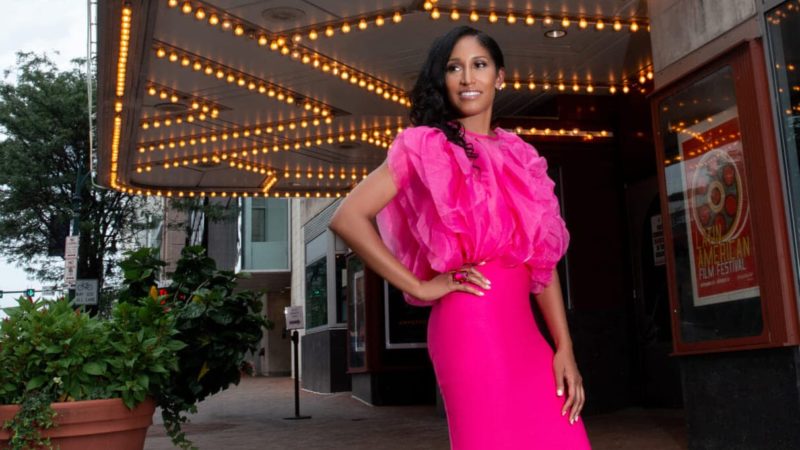
Agnes Moss, founder of the National Black Movie Association (NBMA), can recall the seminal moment that led to her wanting to become a storyteller. The year was 1985; Moss was 12 years old, and she had just seen the film adaptation of Alice Walker’s “The Color Purple” in theaters.
In the years that followed, she can also recall how hard it was to pursue the goal of bringing her own stories to the screen without the necessary resources.
“Back then there was no social media. There were very limited opportunities — no platform where you could really produce a film and have your story told. I had heard of Spike Lee and a few others that were able to break through. I just lacked the resources,” says Moss in discussion with theGrio in support of this year’s National Women’s Small Business Month.
Founded in 2019, the National Black Movie Association was established to help find and provide those resources to young Black storytellers and film students. But due to the emergence of the COVID-19 pandemic, the founding of the nonprofit was marked with as much uncertainty as Moss had experienced back in the early ‘90s.
[…]
As the world began to open back up, Moss was able to add more of her original planning back to NBMA’s trajectory. Last year, she kicked off the Urban Cinephile Film Club locally in Washington, D.C., and is currently working to expand both that club and more programming to other cities, including Baltimore, Atlanta, Raleigh-Durham, N.C., Houston and Chicago.
For NBMA’s next phase, Moss’ major goal is to build membership.
Despite recent recognition, Black actors still deal with racism from fans. Even films that tell Black stories may be made for white audiences, however.
Comments Are Welcome
Note: We moderate submissions in order to create a space for meaningful dialogue, a space where museum visitors – adults and youth –– can exchange informed, thoughtful, and relevant comments that add value to our exhibits.
Racial slurs, personal attacks, obscenity, profanity, and SHOUTING do not meet the above standard. Such comments are posted in the exhibit Hateful Speech. Commercial promotions, impersonations, and incoherent comments likewise fail to meet our goals, so will not be posted. Submissions longer than 120 words will be shortened.
See our full Comments Policy here.