Fisher v. University of Texas at Austin challenges affirmative action in higher education
Share
Explore Our Galleries









Breaking News!
Today's news and culture by Black and other reporters in the Black and mainstream media.
Ways to Support ABHM?
From the Associated Press
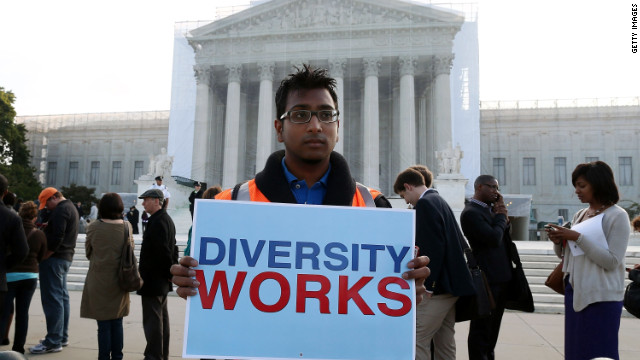
WASHINGTON — The Supreme Court will once again confront the issue of race in university admissions in a case brought by a white student denied a spot at the flagship campus of the University of Texas.
The court said Tuesday it will return to the issue of affirmative action in higher education for the first time since its 2003 decision endorsing the use of race as a factor in admissions. This time around, a more conservative court is being asked to outlaw the use of Texas’ affirmative action plan and possibly to jettison the earlier ruling entirely.
A federal appeals court upheld the Texas program at issue, saying it was allowed under the high court’s decision in Grutter vs. Bollinger in 2003 that upheld racial considerations in university admissions at the University of Michigan law school.
The Texas case will be argued in the fall and the changed makeup of the Supreme Court could foretell a different outcome. For one thing, Justice Samuel Alito appears more hostile to affirmative action than his predecessor, Justice Sandra Day O’Connor. For another, Justice Elena Kagan, who might be expected to vote with the court’s liberal-leaning justices in support of it, is not taking part in the case.
Affirmative action has its strengths and faults.
Comments Are Welcome
Note: We moderate submissions in order to create a space for meaningful dialogue, a space where museum visitors – adults and youth –– can exchange informed, thoughtful, and relevant comments that add value to our exhibits.
Racial slurs, personal attacks, obscenity, profanity, and SHOUTING do not meet the above standard. Such comments are posted in the exhibit Hateful Speech. Commercial promotions, impersonations, and incoherent comments likewise fail to meet our goals, so will not be posted. Submissions longer than 120 words will be shortened.
See our full Comments Policy here.