Exhumations resume for DNA to ID Tulsa Race Massacre victims
Share
Explore Our Galleries









Breaking News!
Today's news and culture by Black and other reporters in the Black and mainstream media.
Ways to Support ABHM?
By Ken Miller, Associated Press
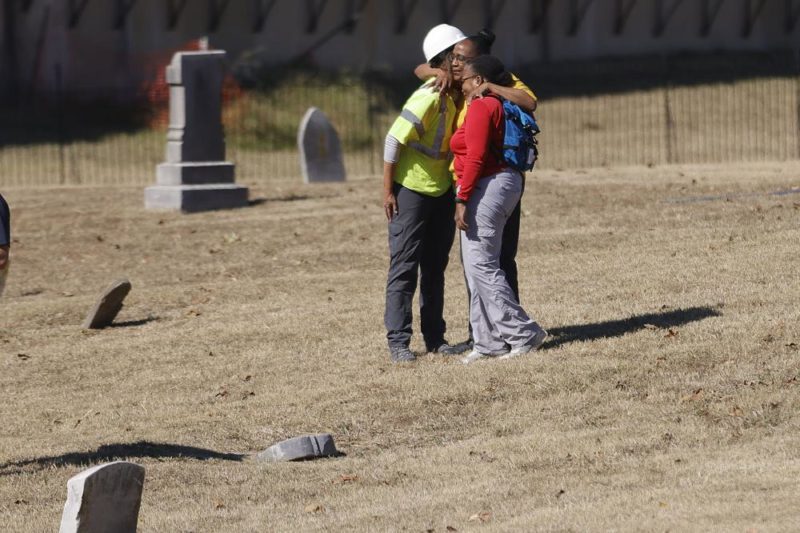
A team of scientists started the process of re-exhuming human remains Wednesday in their effort to identify people killed in the 1921 Tulsa Race Massacre, one of the worst known examples of white mob violence against Black Americans in U.S. history.
The team plans to dig up some of the 19 sets of remains, which were initially exhumed a year ago from Oaklawn Cemetery in Tulsa, to test for more DNA.
Of those 19 remains previously exhumed, 14 fit the criteria for additional DNA analysis, but just two of the 14 had enough usable DNA recovered to begin sequencing by Intermountain Forensics, which is examining the remains. Intermountain Forensics plans to take DNA from the remaining 12.
None of the remains recovered are identified or confirmed as victims of the massacre in which more than 1,000 homes were burned, hundreds were looted and a thriving business district known as Black Wall Street was destroyed in the racist violence. Historians have estimated the death toll to be between 75 and 300, with generational wealth being wiped out.
Miller covers the story here.
Earlier this year, a reparations lawsuit moved forward.
Find more articles this like or visit our online exhibits to learn more Black history.
Comments Are Welcome
Note: We moderate submissions in order to create a space for meaningful dialogue, a space where museum visitors – adults and youth –– can exchange informed, thoughtful, and relevant comments that add value to our exhibits.
Racial slurs, personal attacks, obscenity, profanity, and SHOUTING do not meet the above standard. Such comments are posted in the exhibit Hateful Speech. Commercial promotions, impersonations, and incoherent comments likewise fail to meet our goals, so will not be posted. Submissions longer than 120 words will be shortened.
See our full Comments Policy here.