DOJ opens civil rights investigation into traffic stop that preceded Tyre Nichols’ death
Share
Explore Our Galleries









Breaking News!
Today's news and culture by Black and other reporters in the Black and mainstream media.
Ways to Support ABHM?
By Doha Madani, NBC News
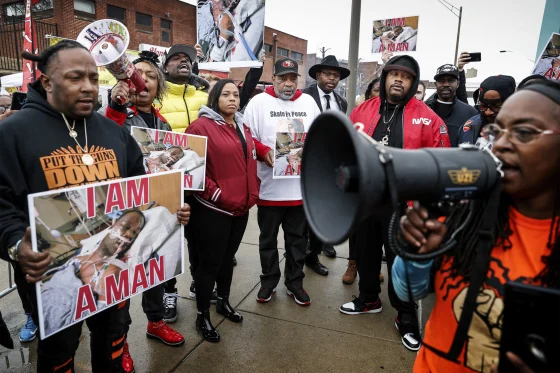
The Department of Justice and FBI on Wednesday announced a civil rights inquiry into a traffic stop in Memphis, Tennessee, that preceded the death of a Black man.
Tyre Nichols, 29, died three days after being taken to a hospital in critical condition following the Jan. 7 stop. The Memphis Police Department said the case was referred to the Tennessee Bureau of Investigation the next day, and an internal investigation was opened into the incident.
The U.S. Attorney’s Office of the Western District of Tennessee announced Wednesday that the FBI’s Memphis field office and the Civil Rights Division of the Department of Justice have also begun looking into the Nichols’ death.
“As this is an open investigation, we are not able to provide additional comment or release further information at this time,” Kevin G. Ritz, U.S. attorney for the district, said.
The original article has background information.
Learn more about the pattern of police behavior toward Black Americans in our special news series.
More breaking news here.
Comments Are Welcome
Note: We moderate submissions in order to create a space for meaningful dialogue, a space where museum visitors – adults and youth –– can exchange informed, thoughtful, and relevant comments that add value to our exhibits.
Racial slurs, personal attacks, obscenity, profanity, and SHOUTING do not meet the above standard. Such comments are posted in the exhibit Hateful Speech. Commercial promotions, impersonations, and incoherent comments likewise fail to meet our goals, so will not be posted. Submissions longer than 120 words will be shortened.
See our full Comments Policy here.