DNA of enslaved iron workers in Maryland reveals links to over 40,000 relatives
Share
Explore Our Galleries









Breaking News!
Today's news and culture by Black and other reporters in the Black and mainstream media.
Ways to Support ABHM?
By Will Dunham, NBCBLK in cooperation with Reuters
The first-of-its-kind analysis examined historical DNA from 27 individuals and identified 41,799 relatives.
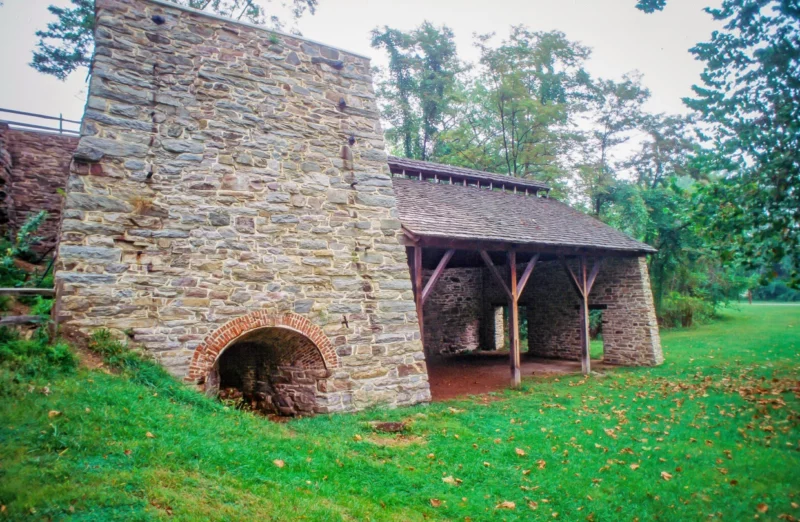
WASHINGTON — Not far from Camp David, the U.S. presidential retreat in Catoctin Mountain Park in Maryland, lies the remnants of an iron forge called Catoctin Furnace founded in the late 18th century, an important site for understanding the dawn of the Industrial Revolution in early U.S. history.
The site now also is providing unique insight into African American history thanks to research involving DNA obtained from the remains of 27 individuals buried in a cemetery for enslaved people at Catoctin Furnace. The study reveals the ancestry of some of the enslaved people who toiled there in the decades after the nation’s founding and identified thousands of living relatives, many still in Maryland.
The cemetery was used from 1774-1850. The remains, held at the Smithsonian Institution since being excavated in the 1970s due to highway construction, were of 16 males and 11 females, ranging from infants to adults over age 60.
They were found to have descended from just a few African populations, in particular West Africa’s Wolof and Mandinka peoples and Central Africa’s Kongo people, and have strong genetic connections to present-day populations in Senegal, Gambia, Angola and the Democratic Republic of Congo.
Millions of people were transported from Africa to the Americas from the 16th to 19th century in the transatlantic slave trade, a brutal chapter in human history. A lack of documentation regarding these people has left descendants with scant information about their own familial backgrounds.
“This knowledge was severed by slavery — a truth that has implications for African Americans far beyond the community of Catoctin Furnace,” said anthropologist Kari Bruwelheide of the Smithsonian’s National Museum of Natural History in Washington, a co-author of the study published on Wednesday in the journal Science.
“This study demonstrates the power of genomics to reconstruct some of what has been destroyed. For African American and United States history, revealing these stories and family legacies is important to understanding and acknowledging who we are, where we came from and how we are connected to each other today,” Bruwelheide added.
Read the rest of the article about the genealogical discovery here.
Learn about the beginning of the African slave trade in this virtual exhibit.
Find more Breaking News here.
Comments Are Welcome
Note: We moderate submissions in order to create a space for meaningful dialogue, a space where museum visitors – adults and youth –– can exchange informed, thoughtful, and relevant comments that add value to our exhibits.
Racial slurs, personal attacks, obscenity, profanity, and SHOUTING do not meet the above standard. Such comments are posted in the exhibit Hateful Speech. Commercial promotions, impersonations, and incoherent comments likewise fail to meet our goals, so will not be posted. Submissions longer than 120 words will be shortened.
See our full Comments Policy here.