Virginia’s probe into public universities’ displacement of Black neighborhoods no longer theoretical
Share
Explore Our Galleries









Breaking News!
Today's news and culture by Black and other reporters in the Black and mainstream media.
Ways to Support ABHM?
Brandi Kellam, Virginia Mercury
A Newport News task force revealed its preliminary findings in a recent meeting, the most public update yet in a process many residents have urged be more transparent
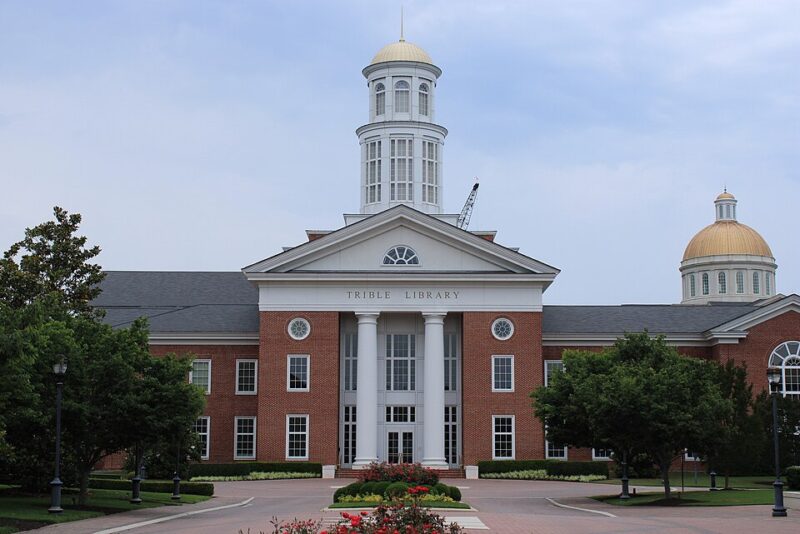
Virginia’s examination of its buried history of university expansion into Black neighborhoods is entering new territory — one that may test how well research efforts translate to accountability.
A legislative commission in Richmond has spent the past year surveying nearly every public institution of higher education, finding that at least 11 cited using eminent domain or other means to acquire land in majority-Black neighborhoods. At the same time, a city–university task force in Newport News is documenting the local impact of one such case involving Christopher Newport University (CNU), sharing new details about its research into the erasure of a historic Black community.
Together, the statewide study and local inquiry illustrate how Virginia’s reckoning over displacement may unfold. At minimum, both have begun to make records and acknowledgment of these histories more public.
Early findings
The Newport News task force — formed nearly two years ago by Mayor Phillip Jones and CNU President William Kelly — held its first public forum earlier this month. Co-chairs Vice Mayor Curtis Bethany III and CNU Provost Quentin Kidd, along with four other members, outlined progress documenting property acquisitions and interviewing impacted families.
According to their presentation, researchers have identified about 130 properties tied to the university’s expansion since the 1960s and are compiling those records into a public digital map that will be housed on the Newport News Public Library’s website.
Councilman Marcellus Harris III, who grew up in the displaced neighborhood, is helping lead interviews.
Learn more about this research.
Earlier this year, researchers released a report on Harvard’s ties to slavery.
Follow more news stories like this.
Comments Are Welcome
Note: We moderate submissions in order to create a space for meaningful dialogue, a space where museum visitors – adults and youth –– can exchange informed, thoughtful, and relevant comments that add value to our exhibits.
Racial slurs, personal attacks, obscenity, profanity, and SHOUTING do not meet the above standard. Such comments are posted in the exhibit Hateful Speech. Commercial promotions, impersonations, and incoherent comments likewise fail to meet our goals, so will not be posted. Submissions longer than 120 words will be shortened.
See our full Comments Policy here.