Transatlantic slavery victims remembered in London
Share
Explore Our Galleries

Breaking News!
Today's news and culture by Black and other reporters in the Black and mainstream media.
Ways to Support ABHM?
From BBC
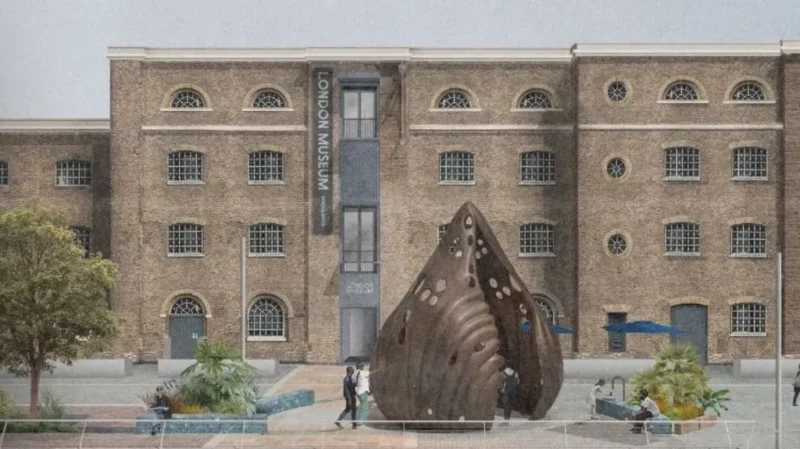
A render of the Wake, a bronze sculpture
Victims of transatlantic slavery will be remembered in London with a series of walking tours, exhibitions and research.
Ten organisations across nine boroughs will each receive up to £10,000 to help them establish the memorials, which will be linked to The Wake.
Planning permission for the near-7m (23ft) bronze cowrie shell sculpture was granted this month, and will stand on West India Quay in Docklands.
Mayor Lord Sadiq Khan said the capital’s role in the trade had for too long “not been fully acknowledged”.
The money comes from the National Lottery Heritage Fund and is being distributed through City Hall’s Sites of Memory programme.
Projects include a touring exhibition in Camden about people who fought for freedom, a storytelling project in Waltham Forest on the borough’s links to slavery, and five guided walks uncovering the black history of the City of London.
Deptford People’s Heritage Museum will document the colonial past of Deptford Dockyard and resistance by African and Caribbean communities who lived nearby.
City Hall said that while London had many monuments reflecting wealth created by the trade, there was little to remember the millions of Africans who were enslaved.
The Wake, by artist Khaleb Brooks, will be the city’s first major public memorial to victims of transatlantic slavery.
Learn about the symbolism in the piece.
Read about how Africans were kidnapped and forced to endure the Middle Passage.
Comments Are Welcome
Note: We moderate submissions in order to create a space for meaningful dialogue, a space where museum visitors – adults and youth –– can exchange informed, thoughtful, and relevant comments that add value to our exhibits.
Racial slurs, personal attacks, obscenity, profanity, and SHOUTING do not meet the above standard. Such comments are posted in the exhibit Hateful Speech. Commercial promotions, impersonations, and incoherent comments likewise fail to meet our goals, so will not be posted. Submissions longer than 120 words will be shortened.
See our full Comments Policy here.