COVID-19
Explore Our Online Exhibits










Breaking News




Worldwide Community Events
Week 4
- Sun 1
- Mon 2
- Tue 3
- Wed 4
- Thu 5
- Fri 6
- Sat 7
- Sun 8
- Mon 9
- Tue 10
- Wed 11
- Thu 12
- Fri 13
- Sat 14
- Sun 15
- Mon 16
- Tue 17
- Wed 18
- Thu 19
- Fri 20
- Sat 21
- Sun 22
- Mon 23
- Tue 24
- Wed 25
- Thu 26
- Fri 27
- Sat 28
- Sun 29
- Mon 30
- Tue 31
- Wed 1
- Thu 2
- Fri 3
- Sat 4
-
04March

ABHM Discounted Tours
ABHM in Milwaukee, WI04March 4:00 PM - 6:00 PM
Memory of Activation: Community Workshop with Milwaukee Repertory Theater
ABHM in Milwaukee, WI -
05March

National Association Arts Education Association Convention
Hyatt Regency Chicago -
06March
National Association Arts Education Association Convention
Hyatt Regency Chicago -
07March
National Association Arts Education Association Convention
Hyatt Regency Chicago07March
-
11March
ABHM Discounted Tours
ABHM in Milwaukee, WI11March
Black Enterprise Women of Power Summit 2026
Bellagio Hotel & Casino11March
-
12March
Black Enterprise Women of Power Summit 2026
Bellagio Hotel & Casino -
13March
Black Enterprise Women of Power Summit 2026
Bellagio Hotel & Casino -
14March
Black Enterprise Women of Power Summit 2026
Bellagio Hotel & Casino14March
-
15March
Black Enterprise Women of Power Summit 2026
Bellagio Hotel & Casino -
18March
ABHM Discounted Tours
ABHM in Milwaukee, WI -
22March
 5:15 PM
Milwaukee Repertory Theater Dinner Dialogue on The Piano Lesson
Herzfeld Foundation & Engagement Center -
24March

National Association of Black Social Workers Conference
Detroit Marriott at the Renaissance Center -
25March
ABHM Discounted Tours
ABHM in Milwaukee, WI25MarchNational Association of Black Social Workers Conference
Detroit Marriott at the Renaissance Center -
26March
National Association of Black Social Workers Conference
Detroit Marriott at the Renaissance Center -
27March
National Association of Black Social Workers Conference
Detroit Marriott at the Renaissance Center -
28March
National Association of Black Social Workers Conference
Detroit Marriott at the Renaissance Center28March 9:00 AM - 3:00 PM
Justice in Action Conference with Dasha Kelly
Marquette University Alumni Union, Rm 16328March 28March
-
01April
ABHM Discounted Tours
ABHM in Milwaukee, WI
Share
A coronavirus known as SARS-CoV-2 caused the COVID-19 pandemic, which originated in China before spreading worldwide in 2020. This global pandemic was not equally destructive, however. The virus itself was more harmful to elderly people and those with pre-existing health conditions. However, economic and racial inequalities prevented some people from accessing necessary screening, treatment, or vaccines or following medical advice such as social distancing or quarantining. Medical racism also played a role during COVID-19, and some Black patients formed support groups after the medical system ignored them. The pandemic also highlighted how some medical equipment worked poorly for Black patients.
Nearly 7 million people died of COVID globally, with millions more surviving the disease that raged for multiple years. In the United States, Black people remained at risk while others decreased their concern, which was entirely warranted. African Americans experienced a higher death rate due to COVID-19 than other races, and many struggle with the effects of long COVID. Lingering illness and disability have removed some people from the workforce, while others struggle financially under the weight of caring for or losing others in their households. Funding intended for Black Americans to help mitigate these harms resulted in lawsuits. Similarly, money intended for COVID-19 support was rerouted to prisons, which had already contributed to the rapid-fire spread of COVID-19.
The pandemic prompted a shift to virtual learning, working, and communication. While some welcomed this shift, it further highlighted economic disparities for others. This also resulted in learning setbacks for students. Meanwhile, COVID-19 resurfaced distrust between the Black community and the medical establishment that stems, in part, from the Tuskegee experiment.
COVID-19 was also the backdrop of the Black Lives Matter movement, which grew after video of the May 2020 murder of George Floyd by a Minneapolis police officer surfaced online.
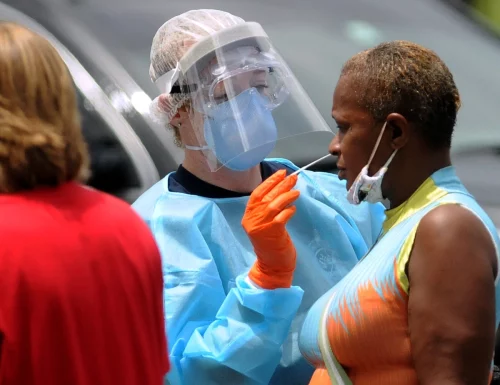
Surveys show that Black people have more lingering concerns about COVID-19 than white people, despite more relaxed guidelines for prevention.
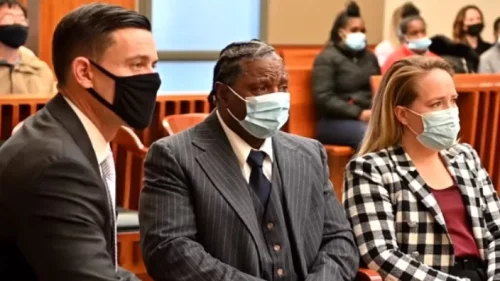
Broadwater’s 1982 conviction was overturned last week after authorities determined there were serious flaws in his prosecution.
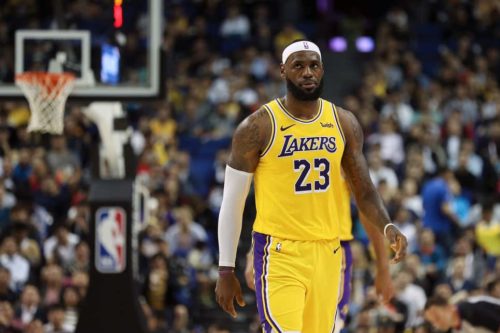
Los Angeles Lakers forward LeBron James will be sidelined indefinitely after entering the NBA’s coronavirus health and safety protocols.
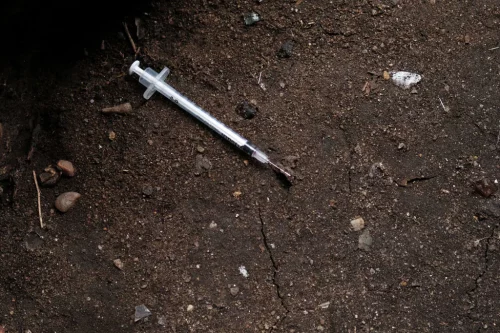
In the thick of the COVID pandemic, deaths among Black Americans soar due to the opioid addiction crisis.
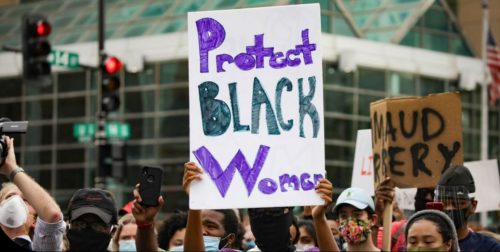
The FBI and CDC found that Black girls and women were the most often killed among female demographics last year.
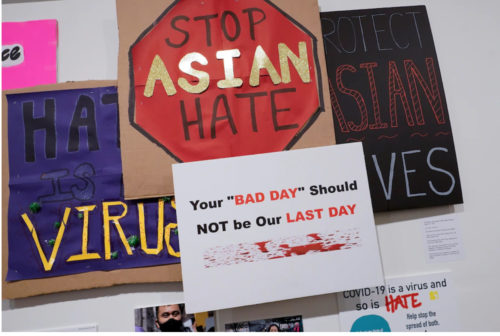
The number of hate crimes in the United States rose in 2020 to the highest level in 12 years, propelled by increasing assaults targeting Black and Asian people, the FBI reported Monday.

Black farmers make up less than 2 percent of the overall farming population in the US and have been stripped of millions of acres of land in the last century. Even the USDA itself played a major role in financially bankrupting Black farm families. The US Dept. of Agriculture was to offer a multibillion dollar loan forgiveness program for farmers of color as part of COVID relief, but is on hold now due to white farmers’ claim of “reverse discrimination.”

This article looks at differences in access to the Covid- 19 vaccine, based on race. There has been progress in accessibility to the vaccine, but there are still people in need.
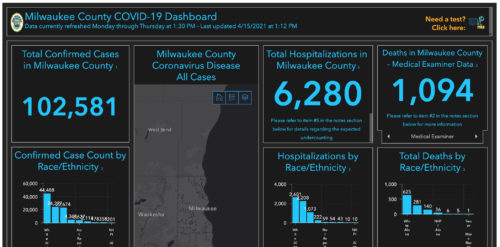
Inequality can be deadly.
Milwaukee was among the first counties to reveal how deadly when the coronavirus pandemic struck just over a year ago. By tracking and publicly sharing demographic data, officials here quickly recognized what soon became a troubling national trend: COVID-19 was devastating Black and Latino communities. Milwaukee County was one of the very first in the country to explicitly track this data based on race.The data has helped determine where resources would be directed, including when it came to testing and vaccinations.
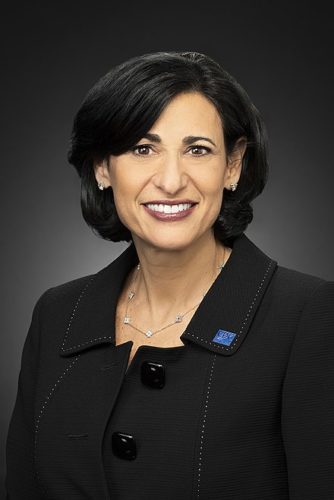
“Racism is a serious public health threat that directly affects the well-being of millions of Americans,” declared the head of the US Centers for Disease Control and Prevention. “As a result, it affects the health of our entire nation. Racism is not just the discrimination against one group based on the color of their skin or their race or ethnicity, but the structural barriers that impact racial and ethnic groups differently to influence where a person lives, where they work, where their children play, and where they worship and gather in community. These social determinants of health have life-long negative effects on the mental and physical health of individuals in communities of color.