Clinton and Obama’s Policies Created Progress—and a Deepening Class Divide in Black America
Share
Explore Our Galleries









Breaking News!
Today's news and culture by Black and other reporters in the Black and mainstream media.
Ways to Support ABHM?
By Damon K Jones, Black Westchester
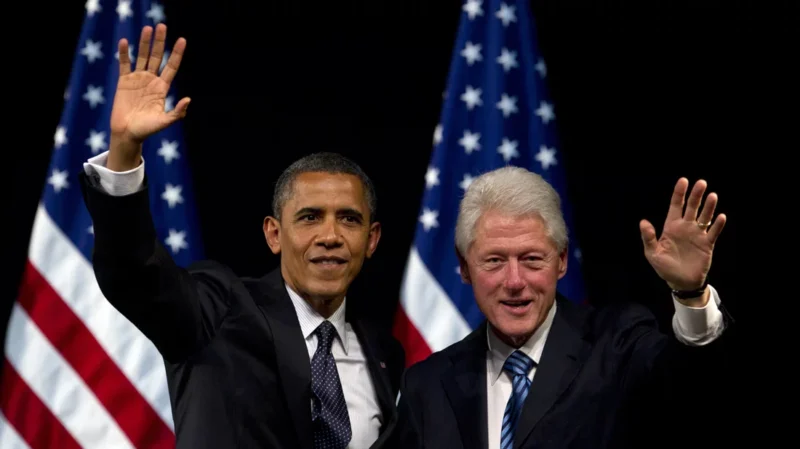
Black communities across the nation are suffering, and while systemic racism is a pervasive reality, we must also confront the uncomfortable truth that some of the policies enacted by leaders we have supported have contributed to our struggles. Bill Clinton and Obama, two iconic Democratic presidents, have long enjoyed enduring appeal among Black Americans. Clinton, famously dubbed “the first Black president,” resonated culturally and was seen as empathetic to Black struggles, while Obama’s historic presidency embodied hope and tangible progress. Their leadership galvanized the Black Democratic base, earning soaring approval ratings throughout their tenures.
However, we must have honest conversations about Democratic policies that have negatively affected Black communities and grapple with how to address their lasting impact. When we examine the policies Clinton and Obama enacted, a sobering reality emerges: while their intentions may have been to uplift the nation, many of their initiatives created or deepened a class divide within Black communities. By prioritizing crime reduction and higher education—admirable goals in themselves—they often perpetuated systemic inequities instead of dismantling them. The legacies of their presidencies tell a complex story of progress achieved at a profound cost to those who needed the most support.
Clinton’s Crime Bill: Safety for Some, Injustice for Many
President Bill Clinton’s 1994 Crime Bill was framed as a solution to rising crime rates, particularly in urban areas. It was enthusiastically backed by many Black leaders at the time, who saw it as a necessary response to combat violence disproportionately affecting their communities. However, the bill’s punitive approach—with its mandatory minimum sentences, “three strikes” laws, and incentives for states to build more prisons—brought devastating consequences that continue to harm Black communities today.
The policy disproportionately targeted and criminalized Black Americans, leading to the mass incarceration of Black men. Breadwinners were removed from families, communities were destabilized, and cycles of poverty were entrenched. Rather than addressing the root causes of crime—economic disinvestment, housing inequality, and lack of opportunity—the bill focused on aggressive policing and punishment, creating a lasting legacy of over-policing in Black neighborhoods. Today, Black communities continue to suffer under harsh policing practices that stem from these policies, fostering mistrust between law enforcement and the very communities they are supposed to protect.
[…]
Obama Bailout of Banks and not the Black Community
During the Obama administration, the continuation of the Troubled Asset Relief Program (TARP) resulted in banks receiving a staggering $245 billion in direct assistance, further cementing the perception among many in the Black lower class that the government prioritized Wall Street over their communities. This bailout, part of a broader effort to stabilize the financial system following the Great Recession, was widely viewed as a betrayal by struggling Black families who received little to no comparable relief. While banks and financial institutions that had caused the economic collapse were propped up with federal aid, Black homeowners—many of whom were disproportionately affected by predatory lending practices—were left to fend for themselves. Homeownership, a crucial pathway to wealth for Black Americans, plummeted during this period, with no equivalent bailout to help working-class and lower-income families keep their homes or recover financially. For many, the image of Wall Street executives receiving lifelines while foreclosures ravaged Black neighborhoods symbolized a glaring neglect of Main Street and a reinforcement of systemic inequities. This neglect deepened feelings of alienation and distrust, as the Obama administration’s actions seemed to favor the elite over vulnerable families.
Keep reading to see other criticisms of these two popular presidents.
Learn about the war on drugs, which some call the war in Blacks.
Comments Are Welcome
Note: We moderate submissions in order to create a space for meaningful dialogue, a space where museum visitors – adults and youth –– can exchange informed, thoughtful, and relevant comments that add value to our exhibits.
Racial slurs, personal attacks, obscenity, profanity, and SHOUTING do not meet the above standard. Such comments are posted in the exhibit Hateful Speech. Commercial promotions, impersonations, and incoherent comments likewise fail to meet our goals, so will not be posted. Submissions longer than 120 words will be shortened.
See our full Comments Policy here.