Church of England sheds light on ‘shameful’ slave trade ties
Share
Explore Our Galleries









Breaking News!
Today's news and culture by Black and other reporters in the Black and mainstream media.
Ways to Support ABHM?
By Jill Lawless, Associated Press
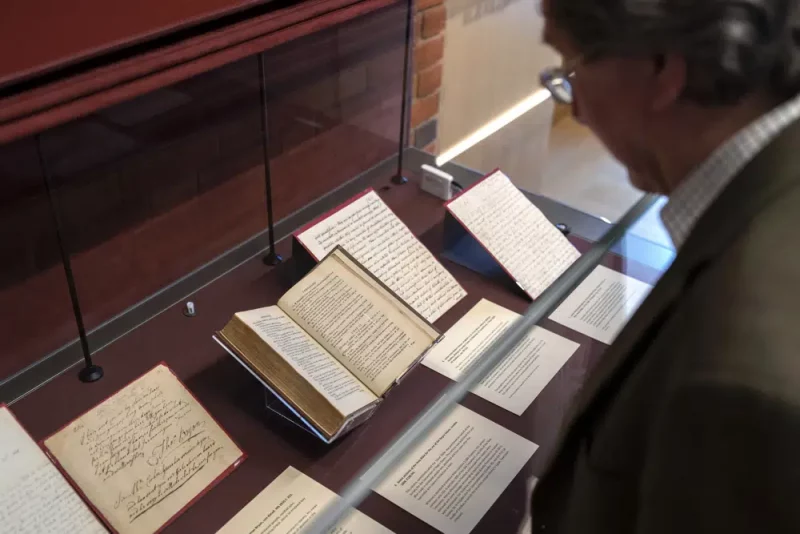
LONDON (AP) — Three centuries ago, an enslaved person in Virginia wrote to a leader of the Church of England, begging to be released from “this cruel bondage.” There was no reply from the church, which at the time was accumulating a tidy profit from the trans-Atlantic slave trade.
The handwritten letter from 1723 — whose author says they must remain anonymous for fear they will “swing upon the gallows tree” if exposed — has gone on display in London as part of efforts by the Anglican church to reckon with its historic complicity in slavery.
“It’s a very poignant document, and also extraordinarily rare,” Giles Mandelbrote, archivist at the church’s Lambeth Palace Library, said Tuesday.
The letter is included in an exhibition at the library exploring the church’s role in the 18th-cenury slave trade. It coincides with a new report setting out that role in hard facts and figures.
The Church Commissioners, the body that administers the church’s 10 billion-pound ($12.3 billion) investment fund, hired forensic accountants in 2019 to dig through the church’s archives for evidence of slave trade links. They spent two years poring over centuries-old ledgers, and what they found is “shaming,” the church said.
Nearly 300 years of slavery have had a drastic impact on the world.
Comments Are Welcome
Note: We moderate submissions in order to create a space for meaningful dialogue, a space where museum visitors – adults and youth –– can exchange informed, thoughtful, and relevant comments that add value to our exhibits.
Racial slurs, personal attacks, obscenity, profanity, and SHOUTING do not meet the above standard. Such comments are posted in the exhibit Hateful Speech. Commercial promotions, impersonations, and incoherent comments likewise fail to meet our goals, so will not be posted. Submissions longer than 120 words will be shortened.
See our full Comments Policy here.