California bill would give public university admission priority to slaves’ descendants
Share
Explore Our Galleries









Breaking News!
Today's news and culture by Black and other reporters in the Black and mainstream media.
Ways to Support ABHM?
By Sophie Austin, Trân Nguyên and Olga R. Rodriguez, Associated Press
SACRAMENTO, Calif. (AP) — A California lawmaker said he will introduce a bill Monday that would give admission priority to the descendants of slaves at the University of California and California State University, two of the largest public university systems in the nation.
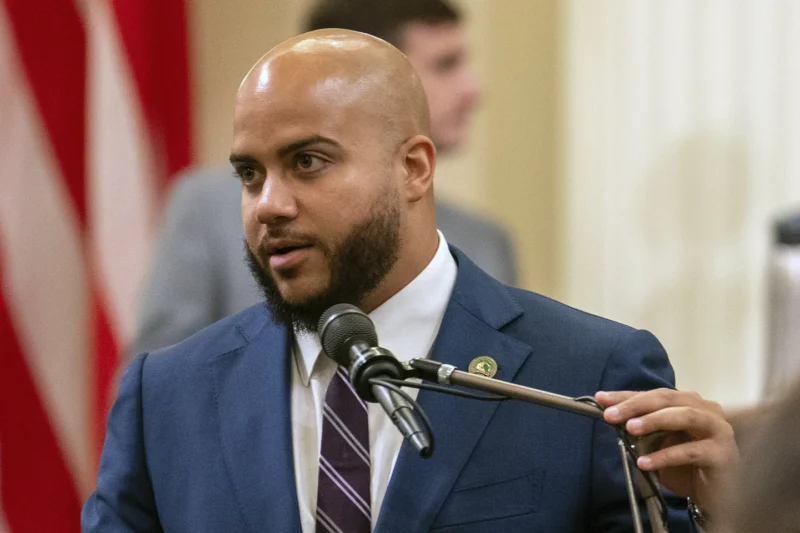
Assembly member Isaac Bryan, a Democrat who represents parts of Los Angeles, told The Associated Press he will introduce the bill as lawmakers meet in the Capitol to swear in new members for a new legislative session. They also will convene a special session to consider ways to protect the state’s progressive policies ahead of President-elect Donald Trump’s second term.
The incoming Trump administration is expected to make dismantling diversity, equity and inclusion programs a priority. A movement to limit so-called DEI initiatives at the college and state level gained momentum after the U.S. Supreme Court’s decision last year to outlaw affirmative action in college admissions, which created a new legal landscape around diversity programs in the workplace and civil society.
Republican opponents of campus diversity programs say they are discriminatory and promote left-wing ideology. Trump has hinted at potential legislation to fine universities over diversity initiatives.
At the same time, legacy admissions, long seen as a perk for the white and wealthy at selective colleges, have come under fire in recent years following the Supreme Court’s ruling against affirmative action. By banning affirmative action but allowing legacy preferences, which favor the children of alumni and donors, critics say the court left admissions even more lopsided against students of color.
“For decades universities gave preferential admission treatment to donors, and their family members, while others tied to legacies of harm were ignored and at times outright excluded,” Bryan told the AP. “We have a moral responsibility to do all we can to right those wrongs.”
Bryan said he is hopeful for approval of the measure, which is in line with recommendations developed by members of California’s Black reparations task force.
“There is a growing understanding of California’s role in perpetuating the inequalities that arose from slavery, and there’s a willingness to try to rectify that harm, to heal that harm,” he said.
Finish reading the article here.
Read up on the legacy of slavery in the United States: Nearly Three Centuries of Enslavement.
More Breaking News.
Comments Are Welcome
Note: We moderate submissions in order to create a space for meaningful dialogue, a space where museum visitors – adults and youth –– can exchange informed, thoughtful, and relevant comments that add value to our exhibits.
Racial slurs, personal attacks, obscenity, profanity, and SHOUTING do not meet the above standard. Such comments are posted in the exhibit Hateful Speech. Commercial promotions, impersonations, and incoherent comments likewise fail to meet our goals, so will not be posted. Submissions longer than 120 words will be shortened.
See our full Comments Policy here.