Blacks Key in 1812 War
Share
Explore Our Galleries









Breaking News!
Today's news and culture by Black and other reporters in the Black and mainstream media.
Ways to Support ABHM?
By Zenitha Prince, The Afro
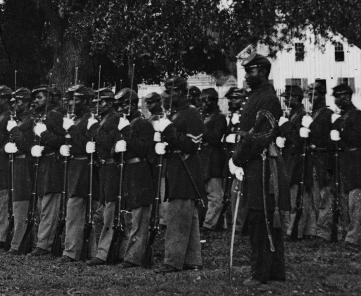
For the United States the War of 1812 was a second War of Independence against the British that birthed emblems of American nationalism such as the national flag, the “Star-Spangled Banner” and Uncle Sam, the national icon.
But for many enslaved Blacks it was the first major pathway to self-determination and freedom. Thousands of Blacks, both free and enslaved, together played a significant role in the outcome of the war, something officials and historians said should be remembered even as the world recognizes the conflict’s bicentennial, which began June 18.
“Black volunteers in large numbers stepped forward to defend homelands which paradoxically deprived them of basic freedoms for which they fought,” wrote historian Gerard T. Altoff in his book {Amongst My Best Men: African Americans and the War of 1812.} “In spite of overt prejudice, discrimination, and hatred, African-Americans stepped forward to serve, either in a civilian or a military capacity.”
For enslaved Blacks with an eye toward freedom the war offered several options: they could fight for the U.S., run away and seek freedom among the Native Americans or join His Majesty’s service. Many chose the latter, convinced that a British victory would hasten the end of slavery. The British nurtured that belief to some extent, and promised the slaves free emigration to British colonies in Canada and the West Indies in exchange for their service.
Read more of the story here.
Black soldiers continued to play key roles.
Our breaking news page has more articles like this.
Comments Are Welcome
Note: We moderate submissions in order to create a space for meaningful dialogue, a space where museum visitors – adults and youth –– can exchange informed, thoughtful, and relevant comments that add value to our exhibits.
Racial slurs, personal attacks, obscenity, profanity, and SHOUTING do not meet the above standard. Such comments are posted in the exhibit Hateful Speech. Commercial promotions, impersonations, and incoherent comments likewise fail to meet our goals, so will not be posted. Submissions longer than 120 words will be shortened.
See our full Comments Policy here.