Black Unemployment Driven By White America’s Favors For Friends
Share
Explore Our Galleries









Breaking News!
Today's news and culture by Black and other reporters in the Black and mainstream media.
Ways to Support ABHM?
By Janel Ross, Huffington Post
There’s a comforting-to-white-people fiction about racism and racial inequality in the United States today: They’re caused by a small, recalcitrant group who cling to their egregiously inaccurate beliefs in the moral, intellectual and economic superiority of white people.
The reality: racism and racial inequality aren’t just supported by old ideas, unfounded group esteem or intentional efforts to mistreat others, said Nancy DiTomaso, author of the new book, The American Non-Dilemma: Racial Inequality Without Racism. They’re also based on privilege, she said — how it is shared, how opportunities are hoarded and how most white Americans think their career and economic advantages have been entirely earned, not passed down or parceled out.
The way that whites, often unconsciously, hoard and distribute advantage inside their almost all white networks of family and friends is one of the driving reasons that in February just 6.8 percent of white workers remained unemployed while 13.8 percent of black workers and 9.6 percent of Hispanic workers were unable to find jobs, DiTomaso said….
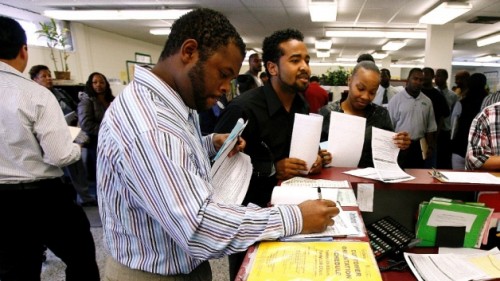
It’s not that black workers don’t attempt the same sort of job assists within their own networks, said Deirdre Royster, an economic sociologist at New York University and author of Race and the Invisible Hand: How White Networks Exclude Black Men From Blue Collar Jobs…
According to Royster, there’s an additional twist: When blacks are aware of a job, they describe the job, the boss, the company and its preferences and needs. Then they follow up with a warning.
“They give the person looking for a job all sorts of information and then they say, ‘But don’t tell them I sent you,'” said Royster.
Black workers are aware of something that researchers are still trying to explain: White bosses often worry, lack of statistical evidence aside, that black workers are more likely to sue them or band together in the workplace and try to change things, Royster said. That seems all the more likely if the black workers already know one another, she said. And many white hiring managers still assume, consciously or unconsciously, that black workers bring undesirable workplace habits and qualities, Royster said.
Read the full article here.
Learn about Black history in our online exhibits.
Read more Breaking News here.
Comments Are Welcome
Note: We moderate submissions in order to create a space for meaningful dialogue, a space where museum visitors – adults and youth –– can exchange informed, thoughtful, and relevant comments that add value to our exhibits.
Racial slurs, personal attacks, obscenity, profanity, and SHOUTING do not meet the above standard. Such comments are posted in the exhibit Hateful Speech. Commercial promotions, impersonations, and incoherent comments likewise fail to meet our goals, so will not be posted. Submissions longer than 120 words will be shortened.
See our full Comments Policy here.