Black, Native American and Fighting for Recognition in Indian Country
Share
Explore Our Galleries









Breaking News!
Today's news and culture by Black and other reporters in the Black and mainstream media.
Ways to Support ABHM?
Enslaved people were also driven west along the Trail of Tears. After a historic Supreme Court ruling, their descendants are fighting to be counted as tribal members.
By Jack Healy, The New York Times
OKMULGEE, Okla. — Ron Graham never had to prove to anyone that he was Black. But he has spent more than 30 years haunting tribal offices and genealogical archives, fighting for recognition that he is also a citizen of the Muscogee (Creek) Nation.
“We’re African-American,” Mr. Graham, 55, said. “But we’re Native American also.”
His family history is part of a little-known saga of bondage, blood and belonging within tribal nations, one that stretches from the Trail of Tears to this summer of uprisings in America’s streets over racial injustice.
His ancestors are known as Creek Freedmen. They were among the thousands of African-Americans who were once enslaved by tribal members in the South and who migrated to Oklahoma when the tribes were forced off their homelands and marched west in the 1830s.
In treaties signed after the Civil War, they won freedom and were promised tribal citizenship and an equal stake in the tribes’ lands and fortunes. But what followed were broken promises, exclusions and painful fights over whether tens of thousands of their descendants should now be recognized as tribal members.
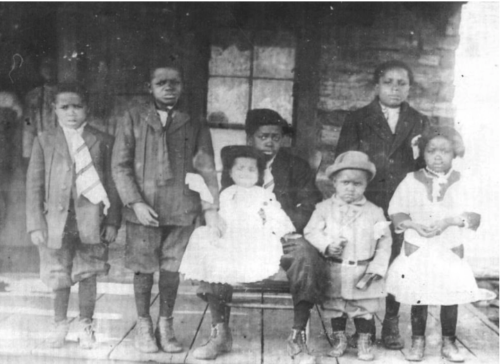
Ron Graham’s father, Theodore Graham, center, as a youth with his youngest sibling, Rowena, on his lap, in a photograph from around 1912. Mr. Graham spent decades assembling documentation showing that he is a citizen of the Muscogee (Creek) Nation.
Some of the descendants have won lawsuits seeking inclusion in the Cherokee Nation. Some gained nominal citizenship as Seminoles, but said they could not access tribal services. Others, like Mr. Graham, have nothing.
But now, a landmark Supreme Court decision for tribal sovereignty has breathed new life into their fight.
Read the full article here.
Read more about roadblocks for Black people here.
More Breaking News here.
Comments Are Welcome
Note: We moderate submissions in order to create a space for meaningful dialogue, a space where museum visitors – adults and youth –– can exchange informed, thoughtful, and relevant comments that add value to our exhibits.
Racial slurs, personal attacks, obscenity, profanity, and SHOUTING do not meet the above standard. Such comments are posted in the exhibit Hateful Speech. Commercial promotions, impersonations, and incoherent comments likewise fail to meet our goals, so will not be posted. Submissions longer than 120 words will be shortened.
See our full Comments Policy here.