Black Farmers Win Court Case That Restores $127 Million in Federal Grants
Share
Explore Our Galleries









Breaking News!
Today's news and culture by Black and other reporters in the Black and mainstream media.
Ways to Support ABHM?
Alliyah Wright, CapitalB
The decision reinstates funding for organizations that say the USDA cuts threatened jobs and community programs.
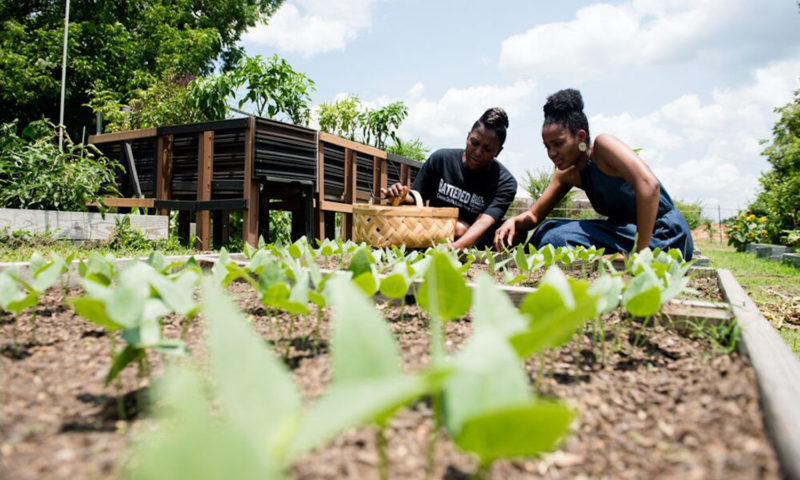
Black farmers like Sharon Mallory can finally get some relief after a judge ruled to restore millions of dollars in grants.
Earlier this year, the Trump administration yanked the money away from organizations led by and in support of Black farmers.
Mallory’s organization, the 2020 Farmers Cooperative, promised to purchase equipment and land and provide food for their communities. They entered agreements with farmers, but the cooperative couldn’t fulfill its obligation after the U.S. Department of Agriculture sent a letter stating the grant had been terminated in March. The department claimed the awards were “discriminatory based on diversity, equity and inclusion and wasteful spending.”
For Mallory, the pause on the land grants caused distrust and disruption to the cooperative’s work. Some organizations had to reduce or layoff staff, end programs, and divert resources. Many farm operations may not be able to survive because of it.
[…]
n a June 30 order, U.S. District Judge Beryl A. Howell ruled that USDA and its employees must reinstate $127 million in awards and file a status report with the court on July 3 by 5 p.m. The decision comes a month after 24 entities — including the 2020 Farmers Cooperative — joined an ongoing lawsuit challenging the USDA’s decision to eliminate the program, which was meant to address historic land loss experienced by farmers of color. It was part of the former President Joe Biden’s Increasing Land, Capital, and Market Access Program, which awarded $300 million to 50 projects.
“Land Access Program Plaintiffs have demonstrated that the terminations of their individual grants were likely contrary to statute, that they will suffer irreparable harm in the absence of relief, and that the balance of equities and public interest favor preliminary injunctive relief,” Howell wrote In a separate opinion released on the same day. “Thus, these grant terminations are preliminarily vacated.”
Hannah Wolf, FarmSTAND staff attorney and counsel for plaintiffs, said this victory is for the people across the U.S. who are working to build “fairer and more sustainable food systems.”
Discover how planting crops can fight oppression.
Comments Are Welcome
Note: We moderate submissions in order to create a space for meaningful dialogue, a space where museum visitors – adults and youth –– can exchange informed, thoughtful, and relevant comments that add value to our exhibits.
Racial slurs, personal attacks, obscenity, profanity, and SHOUTING do not meet the above standard. Such comments are posted in the exhibit Hateful Speech. Commercial promotions, impersonations, and incoherent comments likewise fail to meet our goals, so will not be posted. Submissions longer than 120 words will be shortened.
See our full Comments Policy here.