Muscogee (Creek) Nation Supreme Court ends apartheid, restores Freedmen citizenship
Share
Explore Our Galleries









Breaking News!
Today's news and culture by Black and other reporters in the Black and mainstream media.
Ways to Support ABHM?
By Deon Osborne, The Blaxck Wall Street Times
After decades of denial, Creek Freedmen descendants win battle for citizenship in a case where anti-Blackness could’ve threatened tribal sovereignty.
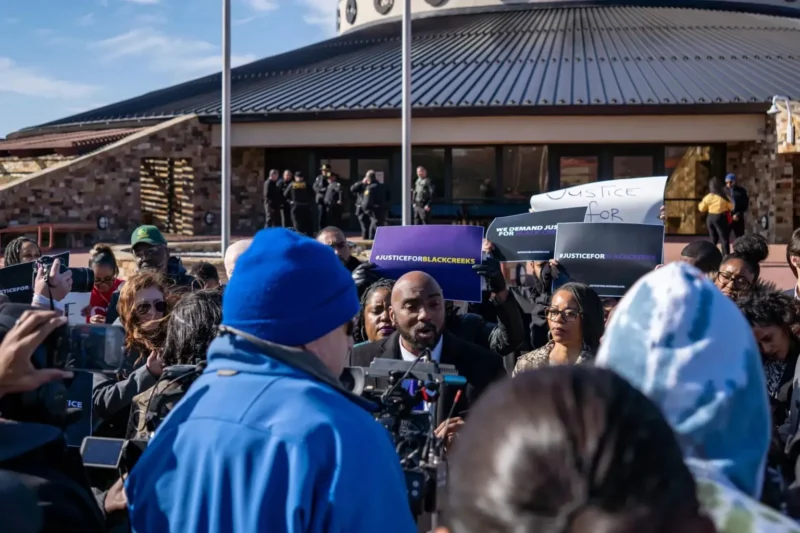
The Muscogee (Creek) Nation Supreme Court ruled in favor of citizenship for Creek Freedmen descendants in a ruling Wednesday that rejected the Muscogee Nation attorney general’s attempt to deny citizenship rights to descendants of Freedmen formerly enslaved by the tribal nation.
“Are we, as a Nation, bound to treaty promises made so many years ago? Today we answer in the affirmative, because that is what Mvskoke law demands,” the Justices wrote in Citizenship Board of the Muscogee (Creek) Nation v. Rhonda K Grayson, et al.
The Court ordered the citizenship applications for Freedmen plaintiffs Rhonda Grayson and Jeff Kennedy to go back in front of the Muscogee (Creek) Nation Citizenship Board take back up their applications for citizenship in line with the Treaty of 1866, which applies to both Creeks on the By Blood Dawes Roll and the Freedmen Roll.
[…]
Ultimately, the Court struck down a system of deciding criticized as racial apartheid that was passed down from the U.S. government: a divided roll of human beings listed as the “By Blood” Dawes Roll and the Freedmen Roll.
[…]
For over 40 years, Freedmen descendants have waged legal battles and attempts to apply for citizenship after the tribal nation changed its constitution to deny restrict citizenship in 1979, a decision at odds with a treaty the Nation signed with the U.S. government promising to end slavery in its territory.
The original article has more details.
Comments Are Welcome
Note: We moderate submissions in order to create a space for meaningful dialogue, a space where museum visitors – adults and youth –– can exchange informed, thoughtful, and relevant comments that add value to our exhibits.
Racial slurs, personal attacks, obscenity, profanity, and SHOUTING do not meet the above standard. Such comments are posted in the exhibit Hateful Speech. Commercial promotions, impersonations, and incoherent comments likewise fail to meet our goals, so will not be posted. Submissions longer than 120 words will be shortened.
See our full Comments Policy here.