‘Black Art: In the Absence of Light’ Reveals a History of Neglect and Triumph
Share
Explore Our Galleries









Breaking News!
Today's news and culture by Black and other reporters in the Black and mainstream media.
Ways to Support ABHM?
An HBO documentary explores two centuries of art by African-Americans, and the path they forged for contemporary Black artists.
By: Holland Carter, New York Times
“This is Black art. And it matters. And it’s been going on for two hundred years. Deal with it.”
So declares the art historian Maurice Berger toward the beginning of “Black Art: In the Absence of Light,” a rich and absorbing documentary directed by Sam Pollard (“MLK/FBI”) and debuting on HBO Tuesday night.
The feature-length film, assembled from interviews with contemporary artists, curators and scholars, was inspired by a single 1976 exhibition, “Two Centuries of Black American Art,” the first large-scale survey of African-American artists. Organized by the artist David C. Driskell, who was then-head of the art department at Fisk University, it included some 200 works dating from the mid-18th to the mid-20th century, and advanced a history that few Americans, including art professionals, even knew existed.
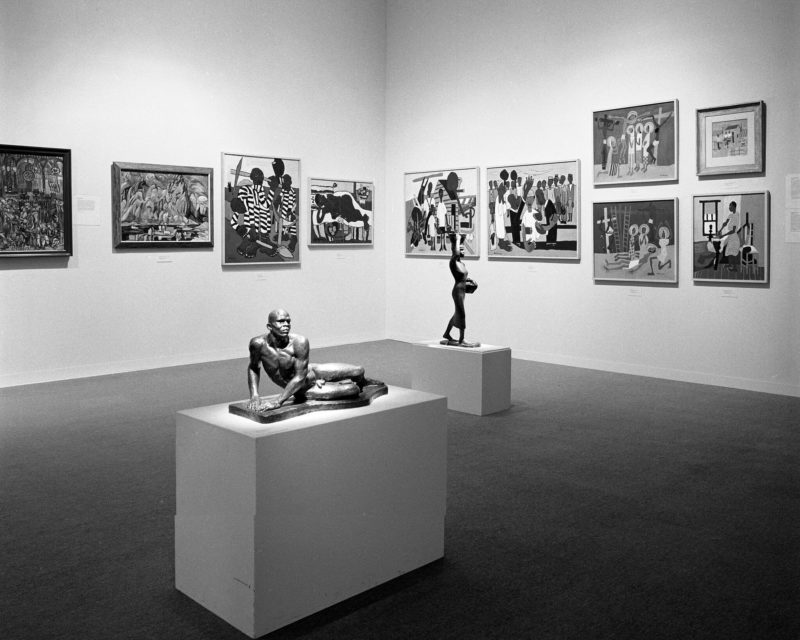
Museum Associates/LACMA
The point of Pollard’s film, which was also the point of Driskell’s 1976 survey, is to demonstrate that, and to demonstrate that Black artists have been making some of the best work and the most relevant work for decades, centuries. But they’ve been making it mostly on the margins, beyond the white art world’s spotlights.
Learn more about Black Art at the African-American Holocaust Museum here.
More Breaking News here.
Comments Are Welcome
Note: We moderate submissions in order to create a space for meaningful dialogue, a space where museum visitors – adults and youth –– can exchange informed, thoughtful, and relevant comments that add value to our exhibits.
Racial slurs, personal attacks, obscenity, profanity, and SHOUTING do not meet the above standard. Such comments are posted in the exhibit Hateful Speech. Commercial promotions, impersonations, and incoherent comments likewise fail to meet our goals, so will not be posted. Submissions longer than 120 words will be shortened.
See our full Comments Policy here.