Are Black people better off in America than in Africa?
Share
Explore Our Galleries









Breaking News!
Today's news and culture by Black and other reporters in the Black and mainstream media.
Ways to Support ABHM?
By Touré, theGrio
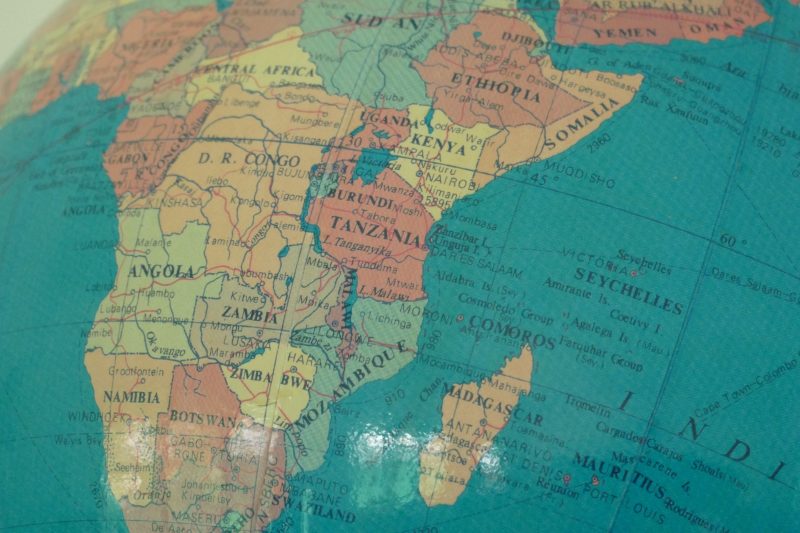
OPINION: The idea that Black people benefit from being in America instead of Africa is racist and lacks a basic understanding of history. I had time today, so I decided to attack this racist argument.
The other day, I heard some white person online say, “In spite of slavery, Black people are ultimately better off in America than in Africa.” Of course, I had all the emotions—I did an internal scream, my blood pressure rose to the boiling point, and I felt like strangling someone. But then I said, I’m gonna let my pen handle it because if I don’t, I might go to jail. So I’m launching a new series: taking down racist arguments. Consider this TDRA No. 1.
There are so many problems with this idea that Black people are ultimately better off being in America than in Africa. The first thing that jumps out to me is that the whole framing is wrong. The speaker assumes that America is just inherently awesome and Africa is inescapably backwards, and the enslavers saved modern African-Americans from that hell and brought us to this heaven. Can you say, white savior complex?
But let’s pull back the lens a bit—in “The Black Diaspora: Five Centuries of the Black Experience Outside Africa,” scholar Ronald Segal asserts that the trans-Atlantic slave trade led to the kidnapping, trafficking and enslavement of almost 12 million African people and also an equal number may have died in the violence of raiding areas, capturing people and transporting them. So in a 400-year period, western Africa may have lost around 24 million people. You cannot disconnect the fact that western African countries are suffering from some issues from the fact that those countries lost a gigantic number of young, able-bodied people over the course of a few centuries. No place could go through a mass subtraction like that and not be deeply impacted. The countries of western Africa would surely be vastly different if not for the massive theft of human beings in the name of slavery.
[…]
There is no separating the troubles that Africa faces today from European colonialism. Looking down your nose at Africa without recognizing Europe’s deliberate part in creating it is to completely misunderstand history.
At the same time, you can’t disconnect the economic success of the United States from having millions of slaves to help build it. It was because of slavery that America became a global economic power. Economist Mark Stelzner of Connecticut College and historian Sven Beckert of Harvard University argue that “The economic trajectory and development of capitalism in the United States are inextricably linked to the brutal institution of slavery,” writes Kathryn Zickuhr for Washington Center for Equitable Growth. “…the work of enslaved Americans was an important driver of growth not only in the South but also for the national economy as a whole, comparable to the growth in per capita output of manufacturing workers in New England.”
Learn more about this process in our online exhibit about the Middle Passage.
Black history continues to be relevant to current events.
Comments Are Welcome
Note: We moderate submissions in order to create a space for meaningful dialogue, a space where museum visitors – adults and youth –– can exchange informed, thoughtful, and relevant comments that add value to our exhibits.
Racial slurs, personal attacks, obscenity, profanity, and SHOUTING do not meet the above standard. Such comments are posted in the exhibit Hateful Speech. Commercial promotions, impersonations, and incoherent comments likewise fail to meet our goals, so will not be posted. Submissions longer than 120 words will be shortened.
See our full Comments Policy here.