America’s First Abolitionist Newspaper Is Being Revived
Share
Explore Our Galleries









Breaking News!
Today's news and culture by Black and other reporters in the Black and mainstream media.
Ways to Support ABHM?
By Philip Marcelo, HuffPost
The Emancipator was America’s first newspaper dedicated to advocating for the end of slavery. Racism is still so prevalent in this country, the publication will be resurrected over 200 years later.
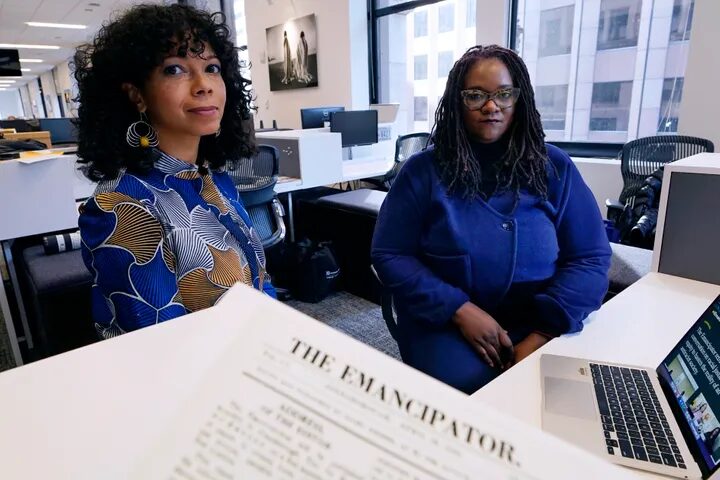
America’s first newspaper dedicated to advocating for the end of slavery is being resurrected and reimagined more than two centuries later as the nation continues to grapple with its legacy of racism.
The revived version of The Emancipator is a joint effort by Boston University’s Center for Antiracist Research and The Boston Globe’s Opinion team that’s expected to launch in the coming months.
Deborah Douglas and Amber Payne, co-editors-in-chief of the new online publication, say it will feature written and video opinion pieces, multimedia series, virtual talks and other content by respected scholars and seasoned journalists. The goal, they say, is to “reframe” the national conversation around racial injustice.
“Our country is so polarized that partisanship is trumping science and trumping historical records,” Payne said. “These ongoing crusades against affirmative action, against critical race theory are not going away. That drumbeat is continuing and so therefore our drumbeat needs to continue.”
Read the full story here.
Learn about slavery leading up to The Emancipator here, or about the North’s complicity during slavery here.
More Breaking News here.
Comments Are Welcome
Note: We moderate submissions in order to create a space for meaningful dialogue, a space where museum visitors – adults and youth –– can exchange informed, thoughtful, and relevant comments that add value to our exhibits.
Racial slurs, personal attacks, obscenity, profanity, and SHOUTING do not meet the above standard. Such comments are posted in the exhibit Hateful Speech. Commercial promotions, impersonations, and incoherent comments likewise fail to meet our goals, so will not be posted. Submissions longer than 120 words will be shortened.
See our full Comments Policy here.