After a spate of education bans, Florida churches are taking Black history into their own hands
Share
Explore Our Galleries









Breaking News!
Today's news and culture by Black and other reporters in the Black and mainstream media.
Ways to Support ABHM?
By Char Adams, NBC
At least 290 churches now hold their own Black history lessons to combat statewide attacks on race-inclusive education.
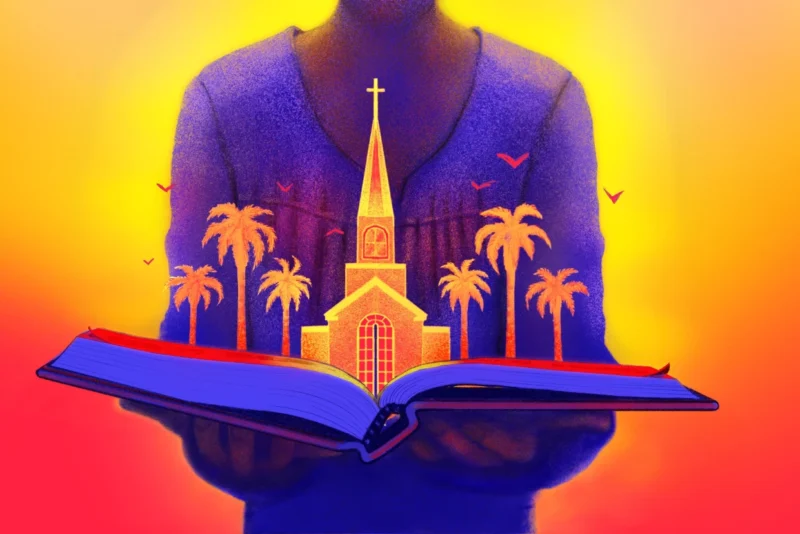
Some 100 people — Black and white, from elementary school-aged children to adults in their 80s — filed into the Agape Perfecting Praise and Worship Center in Orlando in October. They were there for a lesson in Black history from LaVon Bracy, the director of democracy at Faith in Florida, an Orlando-based religious nonprofit. Bracy, who has a Ph.D. in education, spoke to the crowd about the forced journey enslaved Africans took from their homeland to America during the trans-Atlantic slave trade.
“She’d visited Africa a couple of times and brought back soil,” Sharon Riley, a pastor at Agape, said of Bracy who, along with her granddaughters, “filled tiny vials of soil and distributed the soil at the end of the class.”
Those in attendance were engaged, with the children excitedly asking questions, Riley said.
Agape is just one of nearly 300 churches in Florida that have launched Black history lessons for their communities in recent months. From Jacksonville to Miami, Black church leaders are inviting community members — regardless of whether they attend church or are Christians — to learn about everything from the Civil Rights Movement to Juneteenth to mass incarceration. This effort is in direct response to Florida Gov. Ron DeSantis’ statewide crusade to restrict how race and other subjects are taught in public schools and colleges. DeSantis, a Republican, blocked the teaching of Advanced Placement African American history in state high schools, signed the Stop WOKE Act in 2022 to severely limit schools from teaching race-inclusive education, and pushed new public school standards that teach that enslaved Africans benefited from slavery.
Visit this virtual exhibit to begin learning the true history of African-Americans.
Find more Breaking News here.
Comments Are Welcome
Note: We moderate submissions in order to create a space for meaningful dialogue, a space where museum visitors – adults and youth –– can exchange informed, thoughtful, and relevant comments that add value to our exhibits.
Racial slurs, personal attacks, obscenity, profanity, and SHOUTING do not meet the above standard. Such comments are posted in the exhibit Hateful Speech. Commercial promotions, impersonations, and incoherent comments likewise fail to meet our goals, so will not be posted. Submissions longer than 120 words will be shortened.
See our full Comments Policy here.