AfriCOBRA: the collective that helped shape the black arts movement
Share
Explore Our Galleries









Breaking News!
Today's news and culture by Black and other reporters in the Black and mainstream media.
Ways to Support ABHM?
By Nadja Sayej, The Guardian
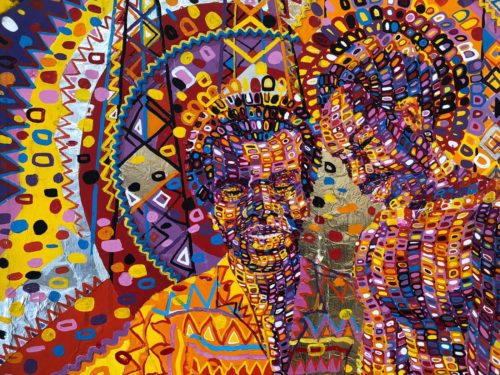
Together We Will Win by Wadsworth Jarrell. Photograph: Courtesy of Kravets/Wehby Gallery
With bright Kool-Aid colors (“Everyone was drinking Kool-Aid,” said the original member Barbara Jones-Hogu), political slogans and portraits of Duke Ellington and Malcolm X, the AfriCOBRA art movement was first founded in 1968 on the south side of Chicago by five artists who wanted to define a “black aesthetic”.
This month, the group is celebrating its 50th anniversary with a retrospective entitled AfriCOBRA: Now at the Kravets Wehby gallery in the Chelsea district of New York City.
“As civil rights activists and an integral part of the black power movement, this art group are still going strong,” said the gallerist Marc Wehby. “I wanted to show people: you’re not looking at a relic or a fossil, you’re looking at vibrant, influential artists who are still making work today….”
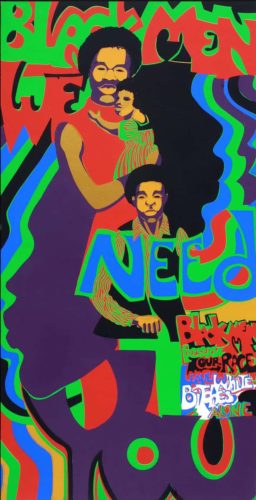
Black Men We Need You, by Barbara Jones-Hogu, 1970. Photograph: Courtesy of Kravets Wehby Gallery
Rhythm is a core element of the art collective’s work, but so is celebration of style, color and life. “We are not addressing racial antagonism, which speaks to power,” said the AfriCOBRA artist Michael Harris. “We are speaking to people within the community, so rather than squeezing into the canon, we’re saying let’s expand the canon to include what we do and who we are….”
Even though these artists came together to help each other, many were ignored by the art world. “People were uncertain about buying an artist who was black and that had a political agenda,” said Wehby. “You’d never see their work at auction or at the Museum of Modern Art, only at the institutions that focused on African American artists….”
The group was rejected from the mainstream art community. “People were afraid,” said Wehby. “Images of black people with fists in the air was not favored – it was only in the past few years that people are realizing this is part of American art history, civil rights history and the black arts movement.”
Read the full article here.
Read more Breaking News here.
Read more about AfriCOBRA here.
View galleries from the ABHM here.
Comments Are Welcome
Note: We moderate submissions in order to create a space for meaningful dialogue, a space where museum visitors – adults and youth –– can exchange informed, thoughtful, and relevant comments that add value to our exhibits.
Racial slurs, personal attacks, obscenity, profanity, and SHOUTING do not meet the above standard. Such comments are posted in the exhibit Hateful Speech. Commercial promotions, impersonations, and incoherent comments likewise fail to meet our goals, so will not be posted. Submissions longer than 120 words will be shortened.
See our full Comments Policy here.