Advocates fight for voting rights of formerly incarcerated people in Mississippi
Share
Explore Our Galleries









Breaking News!
Today's news and culture by Black and other reporters in the Black and mainstream media.
Ways to Support ABHM?
By Safiya Charles, SPLC
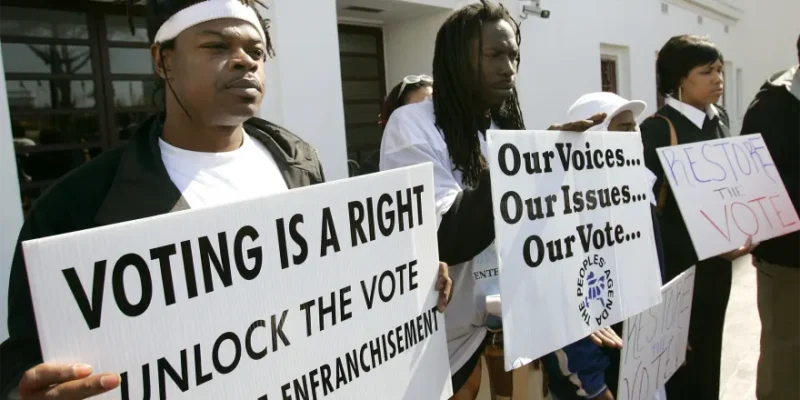
Editor’s note: This story is presented as a tribute to the life of Cynetra Freeman and the work of the organization she founded, the Mississippi Center for Reentry, a Southern Poverty Law Center Vote Your Voice grant recipient. Freeman died late last year, after the SPLC interviewed her for this story. The SPLC extends its sympathies to her friends and family.
When Cynetra Freeman moved from Florida to northwest Mississippi in 2012, she was looking for a job that could help her get back on her feet. The next five years would prove a difficult test.
Physically, she was ill. Freeman had end-stage renal failure that required dialysis three days a week. Mentally, she was tired. The dialysis pushed her body to the brink, leading her to heart failure. It wasn’t until 2017 that her doctor deemed her stable enough to work. Emotionally, she felt raw.
When she entered a county workforce office that year, she was hoping to make a fresh start. The clerk who approached her seemed happy to help. She asked Freeman what kind of professional experience she had — a bachelor’s degree in criminology. The clerk wanted to learn more.
“I wasn’t going to hide my background,” Freeman said.
Years prior, while living in Florida, she had been convicted of a crime. She had worked hard to get her life back on track, paid her fines and fees and successfully petitioned Florida to reinstate her right to vote. She was free and clear to move on with her life. So, she told the county workforce clerk about her record.
[…]
The woman told her, “You will never get a job because you have a felony,” Freeman recalled. Here she was, sitting in an office that received federal funding, in part, to help jobseekers like her with legal records. “And this how I was treated. She made me feel so small. I lost hope.”
Freeman wondered how many others had gone through the same experience. At first wounded by rejection, she said the experience motivated her to “go harder.” That year, she founded the Mississippi Center for Reentry (MS Reentry), the only organization focused exclusively on serving justice-impacted individuals in northwest Mississippi.
Dive into MS Reentry’s mission and work.
Comments Are Welcome
Note: We moderate submissions in order to create a space for meaningful dialogue, a space where museum visitors – adults and youth –– can exchange informed, thoughtful, and relevant comments that add value to our exhibits.
Racial slurs, personal attacks, obscenity, profanity, and SHOUTING do not meet the above standard. Such comments are posted in the exhibit Hateful Speech. Commercial promotions, impersonations, and incoherent comments likewise fail to meet our goals, so will not be posted. Submissions longer than 120 words will be shortened.
See our full Comments Policy here.