A Tale of 2 Mich. Water Crises
Share
Explore Our Galleries









Breaking News!
Today's news and culture by Black and other reporters in the Black and mainstream media.
Ways to Support ABHM?
By K. Araújo, The Root
On Oct. 23, 12 Oakland County, Mich., communities spent roughly nine days without water after a major water main break. Almost 305,000 people were affected by the break.
Oakland County and the Great Lakes Water Authority worked nearly around the clock to ensure that the residents in those communities had safe, potable water. Water stations in various communities were set up. Businesses and residences alike were given access to the scarce commodity.
It directly affected my mother, and as a native Detroiter and former resident of Oakland County, I should’ve been ecstatic to hear how well this situation was handled. So what’s the issue, you ask?
Residents in the Genesee County city of Flint, Mich., have been without potable, usable water since 2014. Government officials—locally and statewide—blatantly lied about the water supply being safe for human consumption. Fertilizers, pesticides, built-up bacteria and lead have contaminated the Flint River (the city’s primary source) for decades. Their half-assed attempt to “clean up the water” never ensured that the city’s folks would remain healthy.
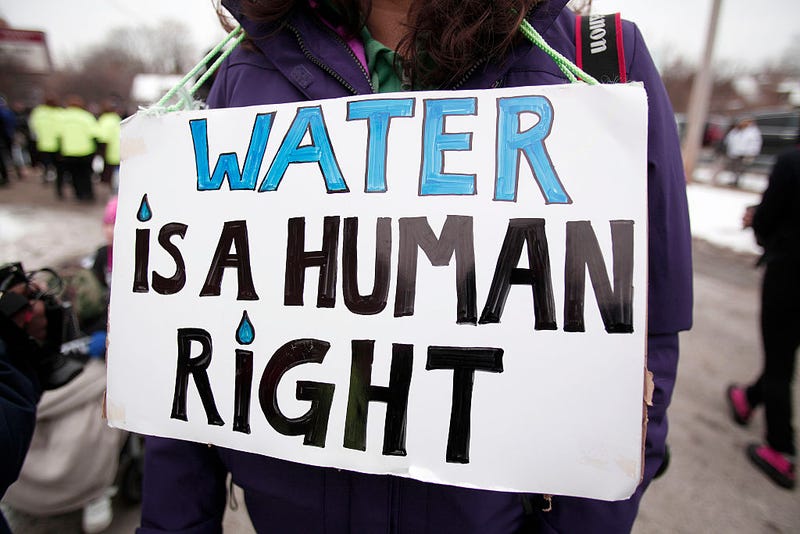
Flint, MI – February 19, 2016. (Bill Pugliano/Getty Images)
It’s been three whole years, and citizens still can’t drink the water. Water stations were set up (some years later), and as of this past summer, many of the stations were closed following Flint’s lead levels being under the federal limit. Why is there such a disparity between Oakland County and Genesee County in their response to each crisis?
Race and class.
Oakland County is one of the wealthiest counties in Michigan. It used to be the wealthiest, but some argue that Livingston may have snatched the “coveted” honor. The median income in Oakland County is roughly $70,000. The county’s population is a whopping 72.8 percent white, which is a glaring contrast to Flint’s 60 percent black population. The median income in Genesee County is about $44,000, but the surprise is that the 72 percent white population of Genesee is typically lower-class and poor.
The water crisis in Flint was not just a “black problem.” It was a class problem. Poor whites have been brainwashed to think that they receive the same consideration as well-to-do whites, and that’s simply not true. Because there are more poor whites, they give the advantage of numbers for rich whites with agendas to use them time and time again. And because skin color matters, they never see they are being consistently shit on.
Businesses and civilians from various counties throughout Michigan sent batches of water to the good folks of Flint. However, their assistance wasn’t enough to mitigate the long-term damage. Fetal deaths spiked, pregnancy rates lowered, 12 people died from Legionnaires’ disease and lead poisoning debilitated many more people in the city. Given the already high infant mortality and morbidity rates in the city, Flint residents never had a chance.
Apparently, money will always talk, and black lives will always be expendable.
Read the full article here.
Read about what the Black Holocaust is here.
Read more Breaking News here.
Comments Are Welcome
Note: We moderate submissions in order to create a space for meaningful dialogue, a space where museum visitors – adults and youth –– can exchange informed, thoughtful, and relevant comments that add value to our exhibits.
Racial slurs, personal attacks, obscenity, profanity, and SHOUTING do not meet the above standard. Such comments are posted in the exhibit Hateful Speech. Commercial promotions, impersonations, and incoherent comments likewise fail to meet our goals, so will not be posted. Submissions longer than 120 words will be shortened.
See our full Comments Policy here.