A look at the Met Museum’s exhibition on Black dandyism
Share
Explore Our Galleries









Breaking News!
Today's news and culture by Black and other reporters in the Black and mainstream media.
Ways to Support ABHM?
By Amanda Rozen, NPR
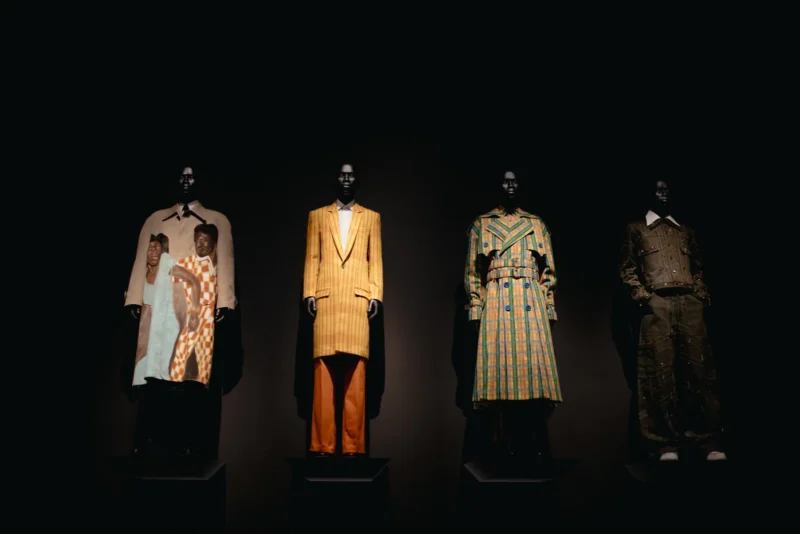
Historically, a dandy is an elegant dresser who challenges social norms. The Metropolitan Museum of Art‘s Costume Institute examines the Black dandy — think Prince or Janelle Monáe — in its current exhibition, “Superfine: Tailoring Black Style.” The exhibition runs at the Metropolitan Museum of Art in New York City through October.
“Superfine” uses garments, paintings, video and more from the 1700s to today to look at how Black style has been used both to keep people subjugated and to help them be more free.
“It highlights the power of style to transform one’s identity and challenge existing hierarchies, and by doing that, unlocking possibilities,” said Max Hollein, the chief executive officer of the Met Museum, in remarks to the media.
Monica L. Miller, a professor at Barnard College and guest curator for the Met exhibition, is the author of the 2009 book Slaves to Fashion: Black Dandyism and the Styling of Black Diasporic Identity, on which the show is based. “Not only is the dandy somebody who pushes boundaries and particularly in relationship to class, gender, sometimes sexuality,” she told NPR, “but then, when you think about the dandy as racialized as Black, he’s also pushing boundaries of what might seem acceptable.”
Black dandies blended African and European style, and some designers continue in that vein.
Head over to the original article to see photos from the exhibit.
Comments Are Welcome
Note: We moderate submissions in order to create a space for meaningful dialogue, a space where museum visitors – adults and youth –– can exchange informed, thoughtful, and relevant comments that add value to our exhibits.
Racial slurs, personal attacks, obscenity, profanity, and SHOUTING do not meet the above standard. Such comments are posted in the exhibit Hateful Speech. Commercial promotions, impersonations, and incoherent comments likewise fail to meet our goals, so will not be posted. Submissions longer than 120 words will be shortened.
See our full Comments Policy here.