A Georgia county that once expelled all Black residents now wants to be a model of love
Share
Explore Our Galleries









Breaking News!
Today's news and culture by Black and other reporters in the Black and mainstream media.
Ways to Support ABHM?
By Marquise Francis, NBC
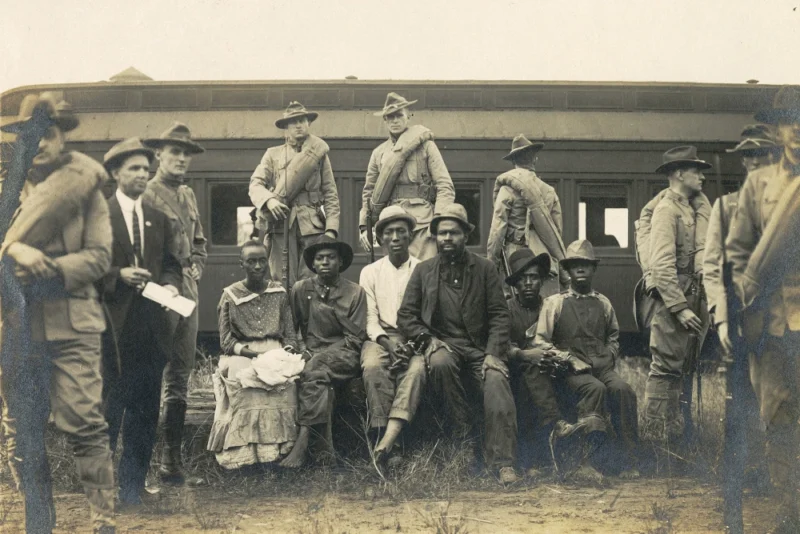
CUMMING, Ga. — When Durwood Snead moved to Forsyth County, Georgia, in 1989, he was struck by the lack of diversity in the region, just 30 miles north of Atlanta.
“It was a pretty much completely white county,” said Snead, who is white and was a pastor at the time.
According to the 1990 census, of the 44,083 people who lived in Forsyth County, 43,573 were white (close to 99%) and just 14 were Black.
It was a place, Snead said, where generations of families typically lived their entire lives. It was also a place with a deep and complex history of racial violence.
[…]
“The history of Forsyth County is literally a case study of racism in American history,” said Nafeesa H. Muhammad, an associate professor of history at Spelman College in Atlanta. “The fact that most Black people do not know about Forsyth’s history or are told to stay away, ironically perpetuates social segregation and delays rectification.”
More than a century later, one-third of Forsyth’s residents are nonwhite, but less than 5% of the county is Black, a figure that’s been stagnant for decades. Yet the numbers alone, some residents say, don’t tell the full story of present-day Forsyth County.
A key chapter in that story is an attempt by Snead and a group of pastors to reshape the county’s history by establishing a college scholarship program in 2022 for descendants of Black families who were violently expelled 110 years before.
Learn about the area’s history–and promise for a better future.
Our breaking news covers more stories about the Black experience.
Comments Are Welcome
Note: We moderate submissions in order to create a space for meaningful dialogue, a space where museum visitors – adults and youth –– can exchange informed, thoughtful, and relevant comments that add value to our exhibits.
Racial slurs, personal attacks, obscenity, profanity, and SHOUTING do not meet the above standard. Such comments are posted in the exhibit Hateful Speech. Commercial promotions, impersonations, and incoherent comments likewise fail to meet our goals, so will not be posted. Submissions longer than 120 words will be shortened.
See our full Comments Policy here.