Slavery exhibit swapped overnight at Philadelphia’s Independence Park
Share
Explore Our Galleries









Breaking News!
Today's news and culture by Black and other reporters in the Black and mainstream media.
Ways to Support ABHM?
Jake Spring, Washington Post
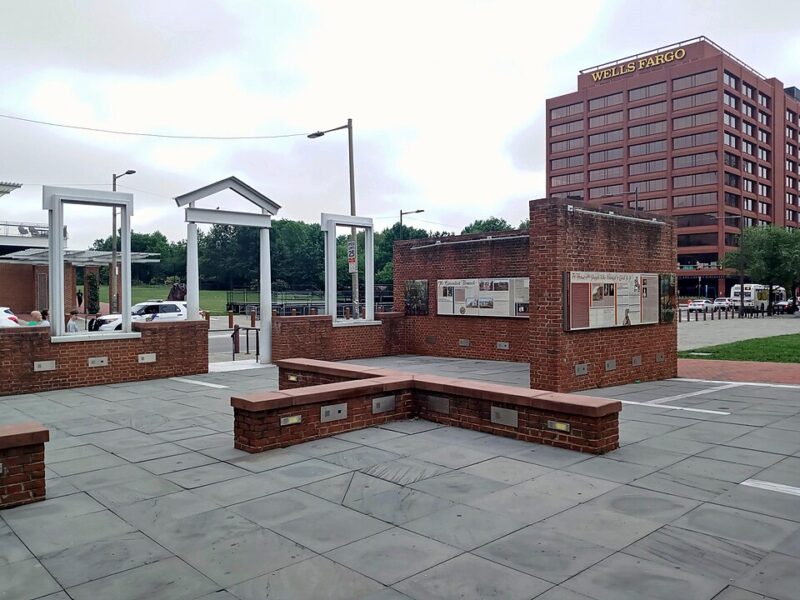
The Trump administration has replaced an exhibit on slavery at Independence National Historical Park in Philadelphia with a version that advocates say sanitizes the nation’s history.
The President’s House site at the park includes an excavation of the home where George Washington lived when he served as president, with surrounding panel displays and videos focused heavily on the stories of nine enslaved people who lived with and served him.
Michael Coard, a founding member of the local advocacy group the Avenging the Ancestors Coalition, said the new panels whitewash history by taking out panels previously in the exhibit, such as one titled “The Dirty Business of Slavery.”
“It’s not going to tell the truth, the whole truth, and nothing but the truth,” Coard said of the new panels.
In a statement, Philadelphia Mayor Cherelle L. Parker said the previous panels were removed overnight.
“Overnight, under the cover of darkness, the federal government removed panels at the President’s House that told a thorough history of Philadelphia,” Parker said. “That it did so at night shows it understands this action is shameful, that it violates community trust.”
Learn more about these actions.
You can also discover black history in our physical and virtual museum galleries.
Comments Are Welcome
Note: We moderate submissions in order to create a space for meaningful dialogue, a space where museum visitors – adults and youth –– can exchange informed, thoughtful, and relevant comments that add value to our exhibits.
Racial slurs, personal attacks, obscenity, profanity, and SHOUTING do not meet the above standard. Such comments are posted in the exhibit Hateful Speech. Commercial promotions, impersonations, and incoherent comments likewise fail to meet our goals, so will not be posted. Submissions longer than 120 words will be shortened.
See our full Comments Policy here.