Reading the Nation at 250: Who Is Missing From the Story?
Share
Explore Our Galleries









Breaking News!
Today's news and culture by Black and other reporters in the Black and mainstream media.
Ways to Support ABHM?
As America prepares to celebrate 250 years of independence, a federal reading initiative reveals a glaring truth: the nation is still telling its story without Black women.
by Tracy Chiles McGhee, WordInBlack
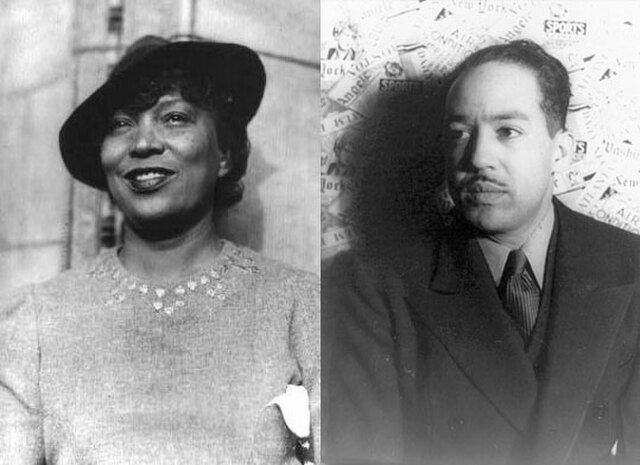
Anniversaries like America’s 250th anniversary of the signing of the Declaration of Independence reveal not only what is celebrated, but what is omitted and whose stories are positioned as central to the national memory. For example, out of the 24 titles included in the National Endowment for the Arts’ Big Read 2026-2027 Honoring America 250 library, none are written by Black women.
The breakdown: 14 by white men, 5 by white women, 3 by Black men, 1 by a Native American woman, 1 by a Latina woman. And ZERO by Black women.
The absence of Black women authors spans genres — nonfiction, fiction, and poetry — excluding voices that have been foundational to American literature, American history, and American evolution. When Black women’s voices are missing from a high-profile national initiative, particularly at a moment of official commemoration, it reinforces a long-standing imbalance in how American literature is framed, funded, and circulated.
Shaping the Stories America Tells
For the 2026–27 grant cycle, NEA, through a partnership with Midwest, will award more than $1 million in project grants, ranging from $5,000 to $20,000, to organizations across the country. These grants support community-wide reading programs built around a single book selected from a curated library of 24 titles, all connected to the theme America250.
According to NEA, this cycle is designed to honor America’s rich artistic and cultural heritage, elevate a wide variety of voices and perspectives, inspire meaningful conversations, and strengthen community connections through shared reading. Grantees are encouraged to design expansive programming such as book discussions, lectures, writing workshops, panel conversations, performances, film screenings, poetry readings, and community storytelling events, all using the selected book as a foundation for civic engagement and creative exploration.
It is a powerful model. Books, after all, remain among our most enduring civic tools. Yet the current offering reveals a clear and consequential gap. The omission is not symbolic. It’s structural — entrenched in the American spine that supports mythologies that are resolute, resistant to diverse stories and perspectives.
Continue reading…Reading the Nation at 250: Who Is Missing From the Story?
Check out our exhibits about the struggle for justice during the Civil Rights Era.
Click here for more Breaking News.
Comments Are Welcome
Note: We moderate submissions in order to create a space for meaningful dialogue, a space where museum visitors – adults and youth –– can exchange informed, thoughtful, and relevant comments that add value to our exhibits.
Racial slurs, personal attacks, obscenity, profanity, and SHOUTING do not meet the above standard. Such comments are posted in the exhibit Hateful Speech. Commercial promotions, impersonations, and incoherent comments likewise fail to meet our goals, so will not be posted. Submissions longer than 120 words will be shortened.
See our full Comments Policy here.