Monday is Confederate Memorial Day. Why does MS still celebrate it and what does it mean?
Share
Explore Our Galleries









Breaking News!
Today's news and culture by Black and other reporters in the Black and mainstream media.
Ways to Support ABHM?
By Bonnie Bolden, Clarion Ledger
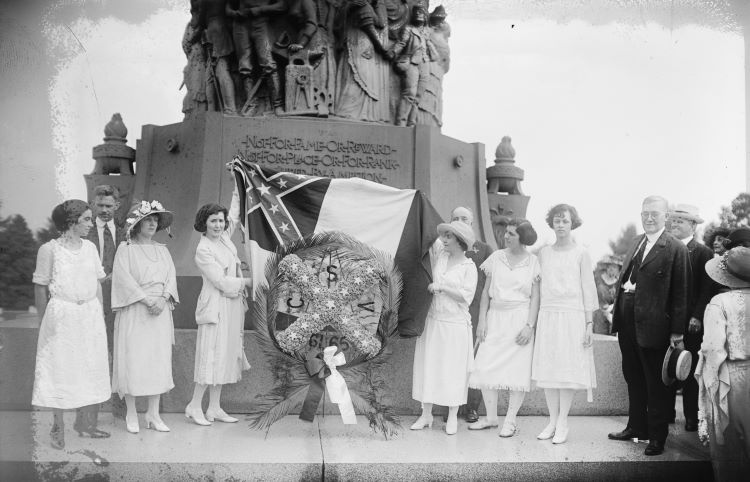
Mississippi will celebrate Confederate Memorial Day soon. Only four states still honor the Civil War dead with a day off for public workers, though others still treat it as a holiday.
The Magnolia State takes it a step further and celebrates April as Confederate Heritage Month. Gov. Tate Reeves signed a proclamation on April 17, noting the war started this month in 1861. It was the deadliest conflict fought in the nation.
“Whereas, as we honor all who lost their lives in this war, it is important for all Americans to reflect upon our nation’s past, to gain insight from our mistakes and successes, and to come to a full understanding that the lessons learned yesterday will carry us through tomorrow if we carefully and earnestly strive to understand and appreciate our heritage and our opportunities which lie before us,” the proclamation reads.
[…]
Confederate Memorial Day was created in Georgia on April 26, 1866. It honored the deaths of Confederate soldiers on the first anniversary of the day that Confederate Gen. Joseph Johnston surrendered the Army of Tennessee to Union Gen. William Sherman at Bennett Place, North Carolina.
Many in the Confederacy felt that negotiation marked the end of the Civil War. Gen. Robert E. Lee had surrendered the Army of Northern Virginia to Gen. Ulysses S. Grant two weeks earlier at Appomattox Court House, but Johnston stayed in the field with almost 90,000 soldiers.
The holiday spread to the other Confederate states. Some changed their celebration dates to something more locally significant.
Keep reading to learn how a bill to end Confederate Memorial Day and celebrate Juneteenth instead failed.
After the Confederacy lost, Reconstruction changed the face of the country — briefly.
Comments Are Welcome
Note: We moderate submissions in order to create a space for meaningful dialogue, a space where museum visitors – adults and youth –– can exchange informed, thoughtful, and relevant comments that add value to our exhibits.
Racial slurs, personal attacks, obscenity, profanity, and SHOUTING do not meet the above standard. Such comments are posted in the exhibit Hateful Speech. Commercial promotions, impersonations, and incoherent comments likewise fail to meet our goals, so will not be posted. Submissions longer than 120 words will be shortened.
See our full Comments Policy here.
[…] Day in late April can be tied to Georgia’s creation of the holiday on April 26, 1866. America’s Black Holocaust Museum explains that the date was chosen to honor the deaths of Confederate soldiers on the first […]