Educator Dwight Harvey Seeks Change In Approach To Discipline In Youth Corrections And Beyond
Share
Explore Our Galleries









Breaking News!
Today's news and culture by Black and other reporters in the Black and mainstream media.
Ways to Support ABHM?
By Genoa Barrow, The Observer
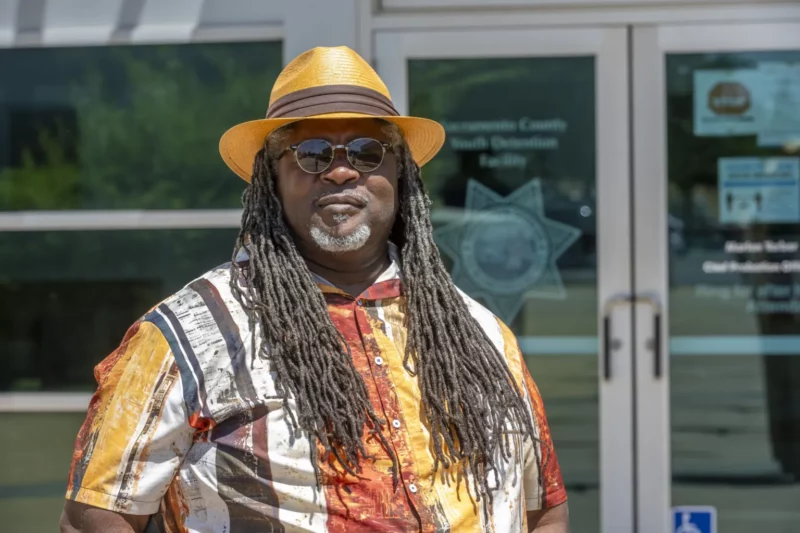
Preachers have other pastors they go to for spiritual guidance and professional athletes have personal trainers who help them stay in tip-top condition. Local educator Dwight Harvey employs the same concept and as a lifelong learner, continues to sharpen his skills to be of best service to the community.
Harvey recently participated in a transformative restorative justice training program, facilitated by Dr. Ernest Uwazie, who previously chaired the Sacramento State’s division of criminal justice and serves as director of its Center for African Peace and Conflict Resolution. The program trains people to facilitate face-to-face meetings between victims and their offenders, and prepares both parties for interaction. What Harvey learned helps inform his work in youth corrections, particularly the opportunity to role play and take on scenarios from each side.
Harvey is the vice principal at El Centro Junior-Senior High School, the on-campus school of the Sacramento County Youth Detention Facility at the B.T. Collins Juvenile Justice Center. Harvey also has his own business, Resolute Solutions LLC, that does restorative practice training and leadership coaching.
“When I go into different districts, one of the things that I try to do is, if they don’t have a program, I try to bring that program to the school,” Harvey says.
Part of the work is first getting people to understand restorative practice, which is an approach to conflict that leans toward empowerment and repair rather than punishment exclusively.
Read about the challenge in Harvey’s own words.
The number of Black people, including youth, who are incarcerated makes some people wonder whether they are free at last.
Stop by ABHM’s breaking news archive.
Comments Are Welcome
Note: We moderate submissions in order to create a space for meaningful dialogue, a space where museum visitors – adults and youth –– can exchange informed, thoughtful, and relevant comments that add value to our exhibits.
Racial slurs, personal attacks, obscenity, profanity, and SHOUTING do not meet the above standard. Such comments are posted in the exhibit Hateful Speech. Commercial promotions, impersonations, and incoherent comments likewise fail to meet our goals, so will not be posted. Submissions longer than 120 words will be shortened.
See our full Comments Policy here.