Here are the Black candidates who made history on election night
Share
Explore Our Galleries









Breaking News!
Today's news and culture by Black and other reporters in the Black and mainstream media.
Ways to Support ABHM?
By Char Adams, NBC News
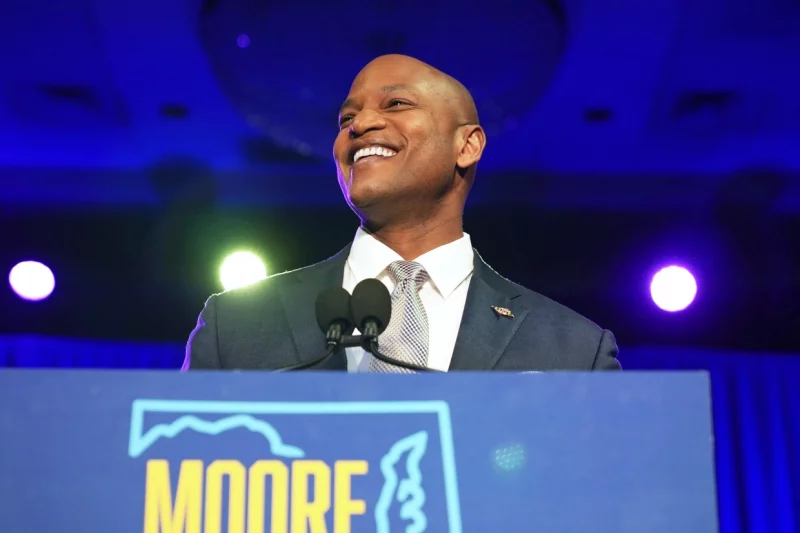
A record number of Black candidates from major parties ran for high office in this year’s midterm elections. While it’s still too soon to determine which party will control the House and the Senate, some states are already celebrating Black historic wins for jobs from governor to secretary of state.
“There’s an electorate, Black people are the center of it, who are understanding our political power,” said DaMareo Cooper, a co-executive director of the Center for Popular Democracy, a progressive advocacy group. “People are thinking about how their voice, and people who come from our community, should be the representatives and deciders for the type of society we want to develop that’s inclusive for everybody.”
The midterms brought a pair of historic victories in Maryland. The first was by Democrat Wes Moore, who beat Republican Dan Cox to become Maryland’s first Black governor and only the third Black governor in the country. Second, the state gained its first Black attorney general, Democratic U.S. Rep. Anthony Brown, who defeated far-right Republican Michael Peroutka.
“It is not lost on me that I’ve made some history here tonight, too. But I also know I’m not the first one to try,” Moore tweeted late Tuesday. “This is just more proof that progress is possible in Maryland. And I am humbled to be a part of this legacy.”
Adams covers more trailblazing Black candidates.
Comments Are Welcome
Note: We moderate submissions in order to create a space for meaningful dialogue, a space where museum visitors – adults and youth –– can exchange informed, thoughtful, and relevant comments that add value to our exhibits.
Racial slurs, personal attacks, obscenity, profanity, and SHOUTING do not meet the above standard. Such comments are posted in the exhibit Hateful Speech. Commercial promotions, impersonations, and incoherent comments likewise fail to meet our goals, so will not be posted. Submissions longer than 120 words will be shortened.
See our full Comments Policy here.