85 years after infamous lynching, another noose stirs tension in Indiana town
Share
Explore Our Galleries









Breaking News!
Today's news and culture by Black and other reporters in the Black and mainstream media.
Ways to Support ABHM?
By Wesley Lowery, the Washington Post
When his boss tossed the noose into his hands, Mikel Neal, a black firefighter in Marion, Ind., had two thoughts.
First, was this a threat? And, second, how would Neal tell his wife about this bizarre act, with its eerie echoes of Marion’s dark past?
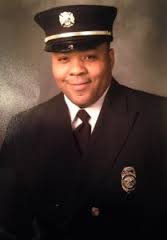
“I’m still in shock,” Neal said in an interview late Monday. “I can’t fathom why would someone do what he did.”
Assistant fire chief Rick Backs has since been suspended by the Marion Fire Department; he released a statement apologizing for forming a noose during a knot-tying exercise at the station house Feb. 13…
Backs, the reports suggested, should have known better. Especially in this town. Especially with its history.
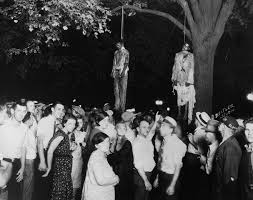
In 1930, two young black men were lynched on suspicion of murdering a white man. Their hanging was captured in a gruesome image by a local photographer, a photo that became an iconic depiction of American lynching – and served as inspiration for the song “Strange Fruit.” It was the last recorded lynching in a northern state.
A third teen, James Cameron, was spared, served time in prison and later wrote a book about the experience. He opened a museum dedicated to the thousands of black Americans killed by white lynch mobs, and eventually was pardoned by then Indiana Gov. Evan Bayh (D).
Neal himself found it hard to make sense of the incident. He said fellow firefighters present that day immediately reacted with outrage on his behalf. Others insisted it must have been a joke. The fire chief and other city officials took it very seriously.
“I want to apologize, on behalf of myself, to the community for this type of incident even happening,” Marion Fire Chief Paul David told a local TV station
[…]
As for Backs, he has stayed out of the spotlight. Other than his initial statement, he has not addressed the allegations publicly. He did respond to requests for comment.
“I sincerely apologize for my actions,” he wrote in the statement released to local media. “I hope this incident can be a reminder to all of us that while we’ve made much progress in our community, issues related to race and equality are still sensitive today and we must take care, in our actions and our words, to always show respect to others.”
Read the full article here.
Read more Breaking News here.
Comments Are Welcome
Note: We moderate submissions in order to create a space for meaningful dialogue, a space where museum visitors – adults and youth –– can exchange informed, thoughtful, and relevant comments that add value to our exhibits.
Racial slurs, personal attacks, obscenity, profanity, and SHOUTING do not meet the above standard. Such comments are posted in the exhibit Hateful Speech. Commercial promotions, impersonations, and incoherent comments likewise fail to meet our goals, so will not be posted. Submissions longer than 120 words will be shortened.
See our full Comments Policy here.