60 years ago, Medgar Evers became a martyr of the Civil Rights Movement
Share
Explore Our Galleries









Breaking News!
Today's news and culture by Black and other reporters in the Black and mainstream media.
Ways to Support ABHM?
By Julian Ring, NPR
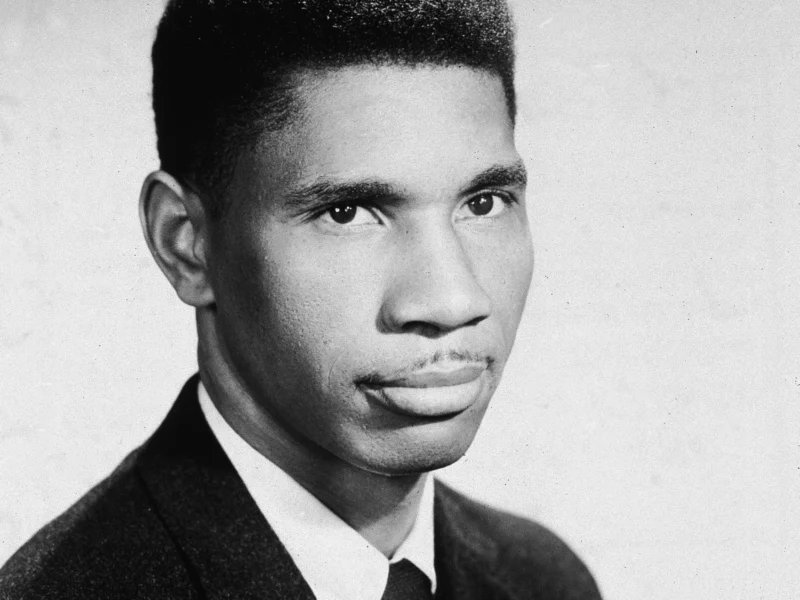
Shortly after midnight on June 12, 1963 — 60 years ago today — civil rights organizer Medgar Evers pulled into his driveway in Jackson, Miss.
He stepped out of his Oldsmobile carrying shirts that read “Jim Crow Must Go.”
Then, in a vacant lot about 40 yards away, a sniper fired a single shot from a high-powered rifle at Evers’ silhouette.
Evers’ wife, Myrlie, rushed outside to find him bleeding in the driveway. He was taken to University Hospital in Jackson and died in the ER. He was 37.
Only a few hours earlier, President John F. Kennedy had addressed the Civil Rights Movement on TV. Now one of its most prominent figures was gone — murdered by a member of the Ku Klux Klan who wouldn’t be brought to justice for more than 30 years.
Fighting for freedom at home
While civil rights leaders like Martin Luther King Jr. pushed for equality across the U.S., Evers focused his efforts on his native Mississippi. He worked as the NAACP’s first field secretary in the state.
Evers led boycotts of white-owned businesses that refused business to Black customers and held voter registration drives for Mississippi’s Black population. He also fought to overturn segregation in public spaces.
Read more about Evers’ legacy in the original article.
Learn about the lesser known but incredibly important Bayard Rustin, another activist of the Civil Rights Era, in this virtual exhibit.
Find more Breaking News here.
Comments Are Welcome
Note: We moderate submissions in order to create a space for meaningful dialogue, a space where museum visitors – adults and youth –– can exchange informed, thoughtful, and relevant comments that add value to our exhibits.
Racial slurs, personal attacks, obscenity, profanity, and SHOUTING do not meet the above standard. Such comments are posted in the exhibit Hateful Speech. Commercial promotions, impersonations, and incoherent comments likewise fail to meet our goals, so will not be posted. Submissions longer than 120 words will be shortened.
See our full Comments Policy here.