5 Black officers beat Tyre Nichols. Black Memphis residents say it’s heartbreaking yet familiar.
Share
Explore Our Galleries









Breaking News!
Today's news and culture by Black and other reporters in the Black and mainstream media.
Ways to Support ABHM?
By Curtiss Bunn, NBC News
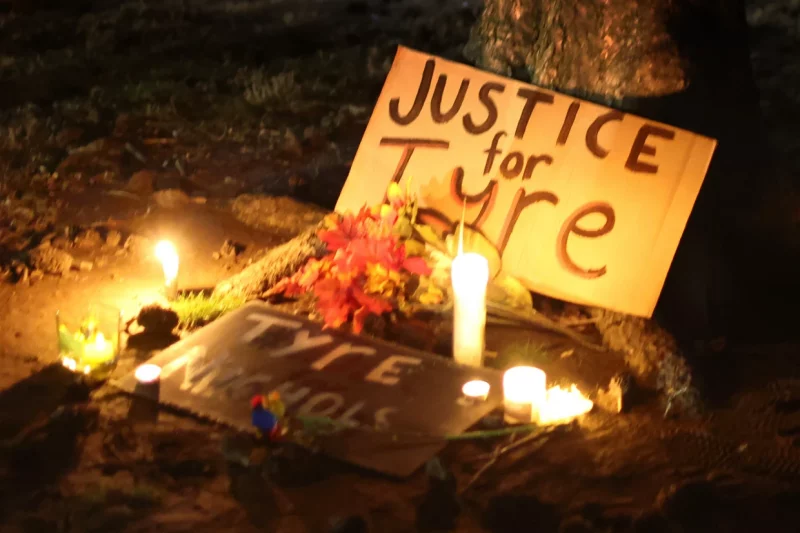
William Jones recalls that as a teenager in Memphis, Tennessee, Black police officers would break up pickup football games with friends when a white neighbor called to complain, often inflicting physical punishment in the process.
“And a lot of times, it was the Black officers who beat us worse than white officers,” Jones, 48, said.
So, when the images of five Black officers flashed on his television screen as the ones who allegedly beat Black motorist Tyre Nichols during a traffic stop on Jan. 7, Jones did not flinch.
“I was not surprised at all,” Jones, a high-security government worker, told NBC News. “Some of these officers get behind their badge, and they forget who they came from. They really believe in blue lives matter. Some of these Black officers are good guys that came from rough neighborhoods, too. But I have seen some of them take that power — lots of them — and misuse it. They didn’t come to my neighborhood and pull no cats out of trees. They came over when we were little boys, 13, 14 years old, and roughed us up. And for no reason.”
Jones and other Black Memphis residents shared a range of reactions to seeing five Black faces as the alleged perpetrators of Nichols’ fatal beating with NBC News. Nichols, 29, died three days after the beating. Their reactions align with data about the Memphis Police Department’s use of force against Black people. According to a 2021 report on city data by TV station WREG, Black men were seven times more likely to experience police brutality than their white male peers.
“I can’t be surprised because it’s a predominantly Black part of town with Black officers patrolling,” said Barbara Johnson, a 75-year-old grandmother. “The relationship with Black people and the police is not very good. Black or white officers, it’s us against them. There’s this mistrust. Period.”
American police are a remnant of patrols created to enforce slavery.
We’ve been covering this saga in our breaking news.
Comments Are Welcome
Note: We moderate submissions in order to create a space for meaningful dialogue, a space where museum visitors – adults and youth –– can exchange informed, thoughtful, and relevant comments that add value to our exhibits.
Racial slurs, personal attacks, obscenity, profanity, and SHOUTING do not meet the above standard. Such comments are posted in the exhibit Hateful Speech. Commercial promotions, impersonations, and incoherent comments likewise fail to meet our goals, so will not be posted. Submissions longer than 120 words will be shortened.
See our full Comments Policy here.