Would a Group Opposed to Police Blow the Whistle on Its Founder?
Share
Explore Our Galleries









Breaking News!
Today's news and culture by Black and other reporters in the Black and mainstream media.
Ways to Support ABHM?
By David A. Fahrenthold, New York Times
The leader of Raheem AI had a plan to hold law enforcement accountable, but his lavish expenditures derailed the organization.
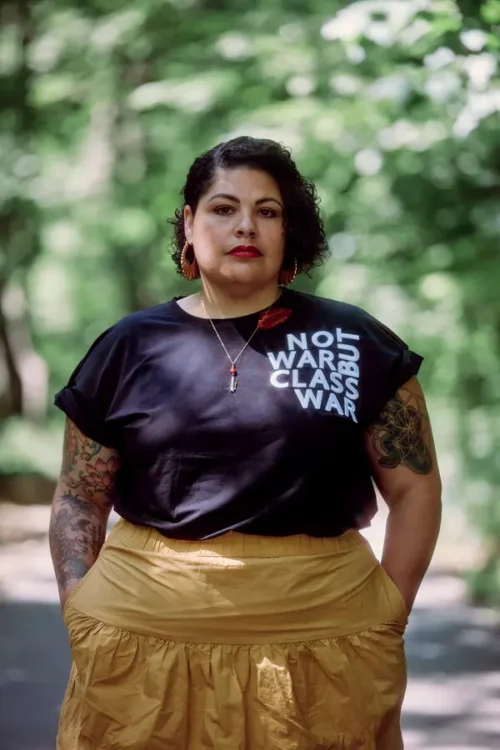
Jasmine Banks’s disillusionment started with a credit-card bill.
She was proudly, fervently dedicated to the radical mission of the nonprofit where she worked, that police everywhere should be abolished. She reported to the group’s founder, a charismatic activist with a compelling life story: His fiancé had been killed by an abusive cop. She believed their nonprofit would show the world it did not need law enforcement.
Then her boss went on vacation, and left her, as deputy director, in charge. Sitting at her desk at home, she saw in the accounting system that he had just used the nonprofit’s card to pay a $1,536 hotel bill — a big bill for such a small organization.
At first, she was not worried, just curious. Why would he do that?
“He knows we’re running out of money,” Ms. Banks remembered thinking.
She dug deeper into the nonprofit’s bank records and found much more that concerned her. Mansion rentals. Vet bills. Luxury clothes. Finally, a stay at a Cancun resort. Ms. Banks scrolled back through Facebook to the week that resort bill was paid. She saw her boss, Brandon D. Anderson, posing in a pool.
The photo was tagged: “Cancun.”
She stewed for a few days, then sent an email to members of the nonprofit’s board: “I am reaching out to you regarding a confidential issue that requires immediate attention.”
What happened next tested everyone who had believed in Mr. Anderson’s vision — fueled by his story of personal pain — for the transformation of America’s relationship with police. Because of what their captivating leader had done, Ms. Banks and her colleagues were forced to grapple with their most deeply held ideals about altruism, crime and justice.
Mr. Anderson appeared to have misused the group’s funds — an allegation he denies. And as a result, the employees lost their jobs — and a chance to build a different world.
They were left with a painful dilemma. They thought the law had been broken, and wanted justice. But they had sworn never to call the authorities on anyone.
The New York Times explains the allegations–and Anderson’s background that prompted him to start the nonprofit.
Cases like this–and those against Black Lives Matter founders–can harm the movement for equality.
Comments Are Welcome
Note: We moderate submissions in order to create a space for meaningful dialogue, a space where museum visitors – adults and youth –– can exchange informed, thoughtful, and relevant comments that add value to our exhibits.
Racial slurs, personal attacks, obscenity, profanity, and SHOUTING do not meet the above standard. Such comments are posted in the exhibit Hateful Speech. Commercial promotions, impersonations, and incoherent comments likewise fail to meet our goals, so will not be posted. Submissions longer than 120 words will be shortened.
See our full Comments Policy here.