Women of Color Were Shut Out of Congress For Decades. Now They’re Transforming It.
Share
Explore Our Galleries









Breaking News!
Today's news and culture by Black and other reporters in the Black and mainstream media.
Ways to Support ABHM?
By, Huffington Post
The 2020 election might have been a battle between two white male septuagenarians, but it also contained two major political milestones for women of color. The first is that on Wednesday, Sen. Kamala Harris will be sworn in as the first Black and South Asian American vice president — the first woman and first woman of color to serve in that role.
The second is that a historic number of women of color — 49 in total, according to data collected by the Center for American Women and Politics at Rutgers University — will serve in the 117th Congress, including the first three Korean American women elected to Congress and the first Black women to represent Washington state and Missouri.
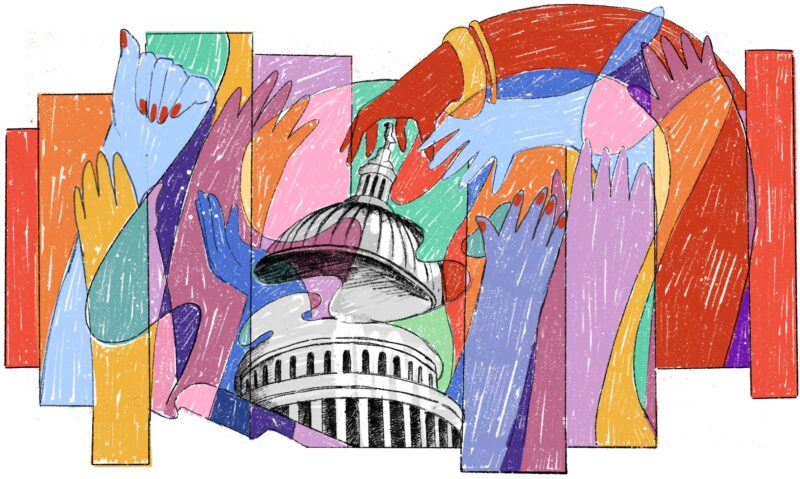
Women of color have been politically active for well over a century, but they haven’t always held the most visible or traditional roles — and often, they weren’t recognized for their efforts. For instance, until recently, a lot of activism was concentrated outside of elected institutions like Congress, with more organizing happening at the grassroots level. This was especially true in the first half of the 20th century, as all women elected to Congress were white, and that didn’t really change until race-based disenfranchisement started to get dismantled via legislation, such as the Voting Rights Act of 1965, or legal victories like Trujillo v. Garley, a 1948 decision that struck down restrictions on Native Americans’ right to vote.
But even though women and people of color still face plenty of barriers when running for office, some experts told us that they have certain advantages. Bejarano said that because of women of color’s multiple identities, they often can connect more easily with voters from different backgrounds. Another potential advantage, according to Bejarano, is that the “women of color that do run are very qualified and potentially have more going for them in their campaign.”
Read the full article here.
Learn more about People of Color in congress here.
More Breaking News here.
Comments Are Welcome
Note: We moderate submissions in order to create a space for meaningful dialogue, a space where museum visitors – adults and youth –– can exchange informed, thoughtful, and relevant comments that add value to our exhibits.
Racial slurs, personal attacks, obscenity, profanity, and SHOUTING do not meet the above standard. Such comments are posted in the exhibit Hateful Speech. Commercial promotions, impersonations, and incoherent comments likewise fail to meet our goals, so will not be posted. Submissions longer than 120 words will be shortened.
See our full Comments Policy here.