‘Why won’t you help me?’ Pregnant women and their babies endure inhumane conditions in jails
Share
Explore Our Galleries









Breaking News!
Today's news and culture by Black and other reporters in the Black and mainstream media.
Ways to Support ABHM?
By Mackenzie Mays, Bloomberg Law and Jon Schuppe, NBC News
Dozens of pregnant women locked up in county jails described excruciating pain, saying their cries for help were ignored as they miscarried or gave birth into cell toilets or on filthy jail floors.
This article was published in partnership with Bloomberg Law.
When Chasity Congious went into labor for the first time, there were no doctors or nurses. No clean blankets to swaddle the coming baby. There were no family members, no friends.
Congious wasn’t even in a hospital. She was alone in a jail cell.
Four months earlier, she suffered a mental health crisis and her mother called 911 for help. Instead, police arrested the 21-year-old.
Now, the contractions were getting stronger, with no way to ease the soaring pain. Bleeding, she said, she pressed the emergency intercom button, but no one came. She tried to get up from the thin, dirty mat, but could not.
She started pushing.
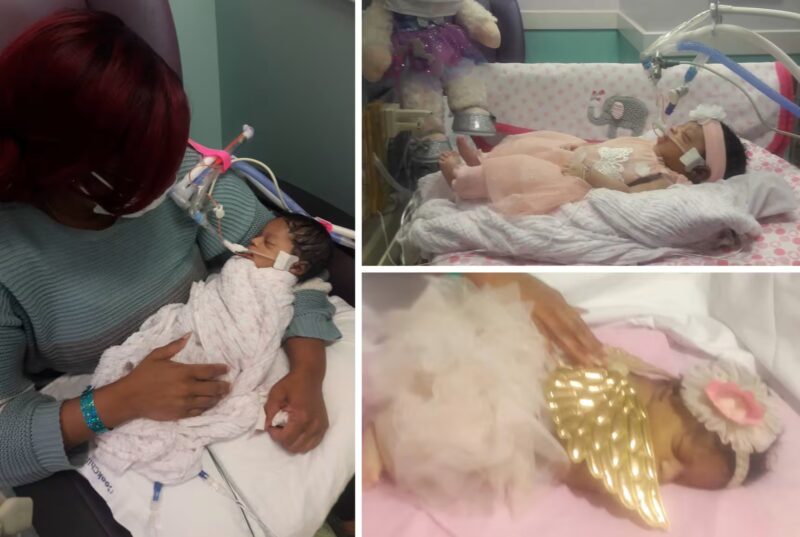
The baby girl was born into the pant leg of Congious’ beige uniform on May 17, 2020, in the Tarrant County, Texas, jail. The newborn struggled to breathe. The umbilical cord was wrapped around her neck — a common problem often resolved with a quick unraveling by a doctor’s hands.
But no one was there to help. Congious’ daughter, named Zenorah, died days later.
Horrific scenes like this are unfolding in jails across the country, according to a yearlong investigation from Bloomberg Law and NBC News that reveals systemic failures. Pregnant women are locked up, often for petty crimes, and say their cries for help go ignored. They are miscarrying or giving birth in excruciating pain into cell toilets or on filthy jail floors. Newborns are suffering infections and long-lasting health issues, their mothers say. Some babies die.
These catastrophes are largely hidden from public view. To bring them to light, this investigation relied on thousands of pages of legal complaints, depositions, police reports, medical and jail records, and body camera and surveillance video. Reporters interviewed more than 60 people including a dozen formerly incarcerated women.
Keep reading to learn about the tragedies revealed.
Hospitals can also pose risks to pregnant Black women.
Comments Are Welcome
Note: We moderate submissions in order to create a space for meaningful dialogue, a space where museum visitors – adults and youth –– can exchange informed, thoughtful, and relevant comments that add value to our exhibits.
Racial slurs, personal attacks, obscenity, profanity, and SHOUTING do not meet the above standard. Such comments are posted in the exhibit Hateful Speech. Commercial promotions, impersonations, and incoherent comments likewise fail to meet our goals, so will not be posted. Submissions longer than 120 words will be shortened.
See our full Comments Policy here.