Why Tracking Racial Disparities in Special Education Still Matters
Share
Explore Our Galleries









Breaking News!
Today's news and culture by Black and other reporters in the Black and mainstream media.
Ways to Support ABHM?
by Hal Smith, Jenny Muniz and Nicole Fuller, Word in Black
Decades of data show persistent inequities for Black and Brown students with disabilities — and federal rollbacks could make them worse.
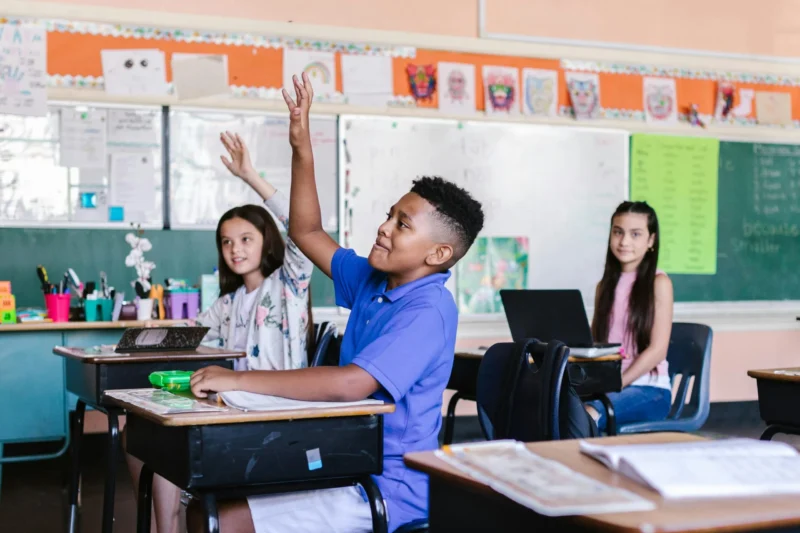
Classrooms should be places of opportunity, not obstacles. But for many students with disabilities, especially students of color and English learners, school often reinforces the inequities it’s supposed to erase.
Black students, for example, have been overrepresented in special education since 1968, when the U.S. Office for Civil Rights first began tracking school district data. The starkest disparities appear in categories that depend on perception, such as learning disabilities and emotional disturbances, where bias too often determines outcomes.
We know that students of color, with the exception of Asian students, are identified for special education at a higher rate than their white peers. Black students are 40% more likely to be identified with a disability and are three times more likely than white students to be suspended or expelled.
Disparities are also observed for Hispanic students in school districts across the country. For example, the Santa Barbara Unified School District was flagged for significant disproportionality for three consecutive school years, given that Hispanic students were found to be three times more likely to be identified as having learning disabilities. When socioeconomic differences of Black and Hispanic students are accounted for, disparities still exist.
What “Significant Disproportionality” Really Means
The term “significant disproportionality” may sound technical, but its consequences are deeply human. This perspective, grounded in the work of civil rights organizations, underscores that this is not solely an educational issue, but a civil rights issue.
Significant disproportionality describes the over- or under-representation of a certain racial or ethnic group in identification for special education services, placement in inclusive or restrictive settings, and discipline actions that exclude students.
In addition to the disparities students of color face, English learners are often both over- and under-identified as needing special education. Language learning behaviors can resemble those associated with learning differences, making it challenging to distinguish them.
Learn how Black children were educated in the Jim Crow South.
Comments Are Welcome
Note: We moderate submissions in order to create a space for meaningful dialogue, a space where museum visitors – adults and youth –– can exchange informed, thoughtful, and relevant comments that add value to our exhibits.
Racial slurs, personal attacks, obscenity, profanity, and SHOUTING do not meet the above standard. Such comments are posted in the exhibit Hateful Speech. Commercial promotions, impersonations, and incoherent comments likewise fail to meet our goals, so will not be posted. Submissions longer than 120 words will be shortened.
See our full Comments Policy here.