Why The History of Segregated Facilities Matters in the Trump Era
Share
Explore Our Galleries









Breaking News!
Today's news and culture by Black and other reporters in the Black and mainstream media.
Ways to Support ABHM?
By Shannon Dawson, News One
America has made significant progress since the era of segregation, but the Trump administration may be putting that progress at risk.
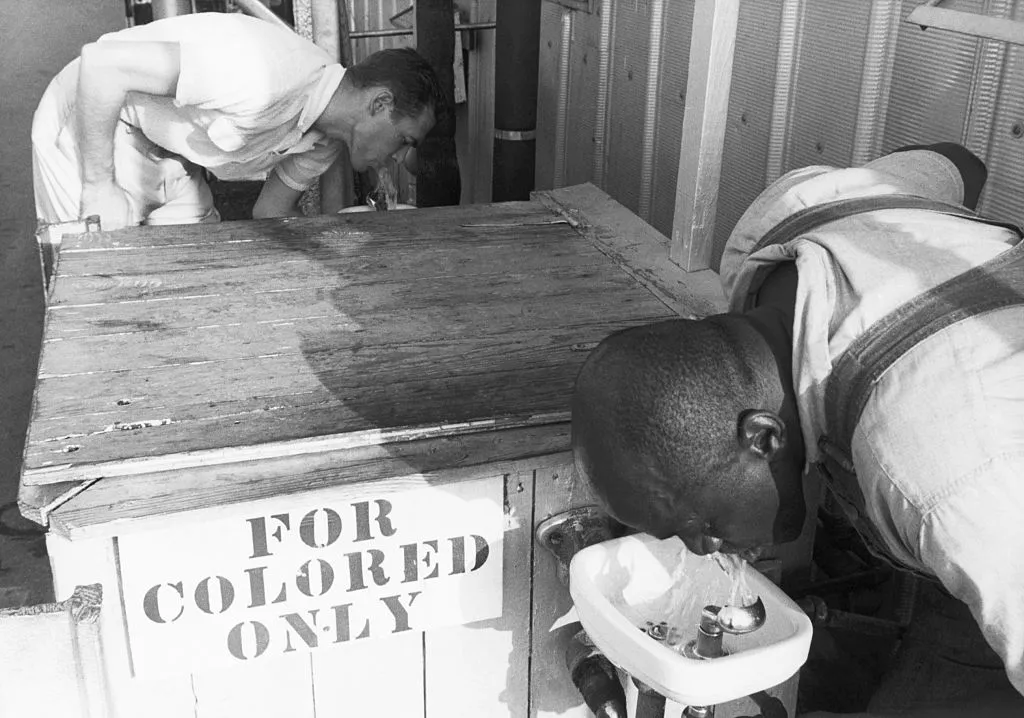
America has come a long way since the institution of segregation, a system of enforced separation based on race, that lasted well into the 20th century. It involved laws, policies, and social customs that kept Black and white Americans apart in public spaces, schools, transportation, housing, and more. Though legally dismantled in the mid-20th century, the legacy of racial segregation in the United States remains deeply rooted, and in some cases, reawakened by modern political forces.
Before we examine the more recent efforts by President Donald Trump and his administration to roll back decades of civil rights progress, it’s crucial to understand how segregation took hold in America, and how long and hard the fight for equality has been.
The Origins: The Black Codes and Post-Slavery Control
Per History, following the end of the Civil War in 1865, the South found new ways to restrict the freedoms of newly emancipated Black Americans. One of the earliest tools was the implementation of Black Codes, laws designed to control nearly every aspect of Black life, from employment and residency to mobility and behavior. These codes ensured that while slavery had ended in name, its spirit lived on through forced labor, curfews, vagrancy laws, and limited civil rights.
Institutionalizing Racism: The Jim Crow Era
By the late 19th century, racial separation became not just a social custom but a codified law, especially in the South. Jim Crow laws mandated the segregation of schools, neighborhoods, transportation, theaters, parks, hospitals, cemeteries, and even water fountains. White and Black Americans were kept apart in nearly every sphere of public and private life, under the pretense of maintaining order and “racial purity.”
Professional offices had separate waiting rooms for Black and white patients. Entire cities were carved into racially designated zones.
Read more to on how the Trump Era is putting desegregation at risk.
Check out our feature on ABHM on racial segregation past and present here.
Check out our Breaking News section for more Black News.
Comments Are Welcome
Note: We moderate submissions in order to create a space for meaningful dialogue, a space where museum visitors – adults and youth –– can exchange informed, thoughtful, and relevant comments that add value to our exhibits.
Racial slurs, personal attacks, obscenity, profanity, and SHOUTING do not meet the above standard. Such comments are posted in the exhibit Hateful Speech. Commercial promotions, impersonations, and incoherent comments likewise fail to meet our goals, so will not be posted. Submissions longer than 120 words will be shortened.
See our full Comments Policy here.