Why blacks are urging a Black Friday boycott
Share
Explore Our Galleries









Breaking News!
Today's news and culture by Black and other reporters in the Black and mainstream media.
Ways to Support ABHM?
By Soledad O’Brien and Rose Arce, CNN
[Editor’s note: Soledad O’Brien, CEO of Starfish Media Group, produced the CNN documentary “Black and Blue,” which airs at 11 tonight on CNN. Rose Arce is Starfish Media Group’s executive producer.]
(CNN) — Once again, the streets are electric with anger after a white police officer evades charges for fatally shooting a black man. Sirens screech and wood batons push back marchers protesting from Missouri to New York to Los Angeles. This time the cadence of “No Justice, No Peace” has been replaced with “Hand’s Up. Don’t Shoot.”
[…]
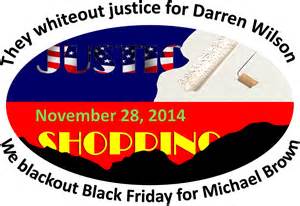
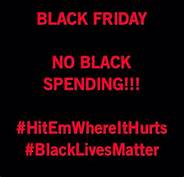
A loose network led by African Americans in the film and arts world has emerged from the fog of tear gas to call for a quiet riot in response: a boycott of Black Friday shopping. Ryan Coogler, who directed the 2013 film about police brutality called “Fruitvale Station,” told us he was confounded by the eruptions of “human rights violations committed by public servants.”
“There are three ways you can express yourself,” Coogler said. “You can vote. You can protest. You can choose how you spend your money that goes to America’s corporations that hold a lot of power.”
“We’ve got to fight the powers that be!” proclaimed Public Enemy’s Chuck D in 1989. With the embers of Ferguson still smoldering, it is clear that the struggle continues. But by taking their purchasing power away on retailers’ favorite day of the year, the voice of blacks in America, and their allies, may echo more loudly in its absence from shopping malls and big box stores.
Earning less than whites and unemployed at more than double the national average, African Americans still have $1 trillion in buying power, according to Nielsen. They spend more on media, watch more television, shop more frequently off and online and spend more on beauty products than any other ethnic group in the country. That is serious sway.
People who make movies also have sway — people such as Ava DuVernay, director of the upcoming film “Selma” and actors Michael B. Jordan (“The Wire”) and Nate Parker (“The Secret Life of Bees”). #BlackOutBlackFriday has even produced its own minifilms to fuel this modern version of the bus boycotts. One of them features an interview with the daughter of Eric Garner, who describes losing her father to police violence. Garner was choked to death by police who suspected he might be selling “loosies” or loose cigarettes…
Read the full article here.
More Breaking News here.
Comments Are Welcome
Note: We moderate submissions in order to create a space for meaningful dialogue, a space where museum visitors – adults and youth –– can exchange informed, thoughtful, and relevant comments that add value to our exhibits.
Racial slurs, personal attacks, obscenity, profanity, and SHOUTING do not meet the above standard. Such comments are posted in the exhibit Hateful Speech. Commercial promotions, impersonations, and incoherent comments likewise fail to meet our goals, so will not be posted. Submissions longer than 120 words will be shortened.
See our full Comments Policy here.