Who Was the First African American?
Share
Explore Our Galleries









Breaking News!
Today's news and culture by Black and other reporters in the Black and mainstream media.
Ways to Support ABHM?
By Henry Louis Gates, Jr. in theRoot.com
Like many of you, I was always told that the first Africans to arrive in what is now the United States were the “20 and odd” Africans who arrived as slaves in Jamestown, Va., from what is now the country of Angola, in 1619.
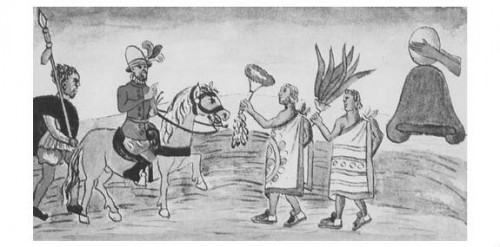
e Islas de la Tierra Firme, 1581)
But this turns out not to be true. As a matter of fact, Africans arrived in North America more than a century before both the Mayflower landed at Plymouth Rock and before these Angolans arrived in Virginia. What’s more, we even know the identity of the first documented African to arrive,…and more astonishing, he wasn’t even a slave. Next year will be the 500th anniversary of his arrival in Florida, and the state plans to commemorate this remarkable event.
Read more about the extraordinary Juan Garrido here.
Discover more about Black American history in our online galleries.
Don’t forget to check out other breaking news stories.
Comments Are Welcome
Note: We moderate submissions in order to create a space for meaningful dialogue, a space where museum visitors – adults and youth –– can exchange informed, thoughtful, and relevant comments that add value to our exhibits.
Racial slurs, personal attacks, obscenity, profanity, and SHOUTING do not meet the above standard. Such comments are posted in the exhibit Hateful Speech. Commercial promotions, impersonations, and incoherent comments likewise fail to meet our goals, so will not be posted. Submissions longer than 120 words will be shortened.
See our full Comments Policy here.