What’s in a name? Why Ketanji Brown Jackson’s matters so much
Share
Explore Our Galleries









Breaking News!
Today's news and culture by Black and other reporters in the Black and mainstream media.
Ways to Support ABHM?
By Robyn Autry, chair of the Sociology Department at Wesleyan University
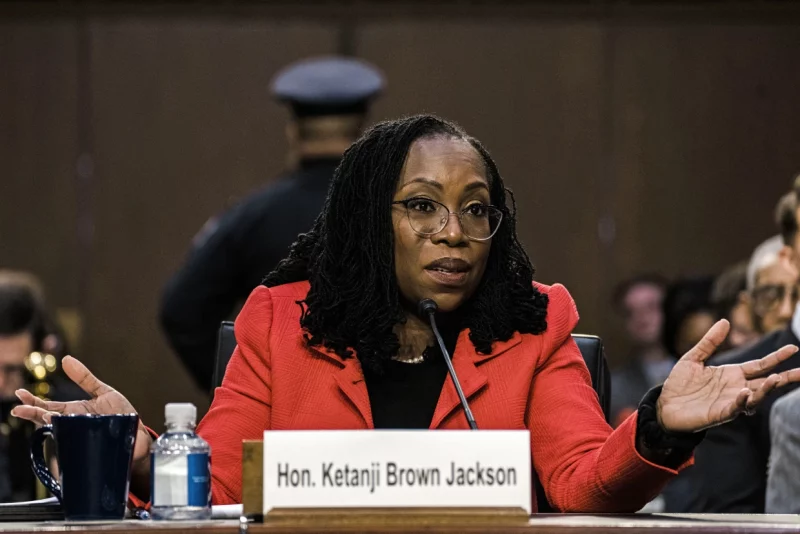
The addition of Justice Ketanji Brown Jackson to the Supreme Court doesn’t alter the body’s conservative majority as the court opens its new term on Monday. But she does change the court’s makeup in fundamental ways that go beyond ideology.
That transformation begins with the first name she bears and now adds to the high court’s pantheon. While she is the third Black person to become a justice, she is the first Black woman and the only one to have an African name. The significance of that lone African name being listed among the 115 others since the court’s inception cannot be understated. It represents a powerful twist in the history still unfolding since the first enslaved Angolans arrived on the coast of Virginia in 1619.
During Jackon’s confirmation hearings, we heard accounts of her career as a federal judge and public defender, her judicial track record and philosophy. But we also heard more personal stories from Jackson about her family, including her parents, who she said gave her an African name to demonstrate their pride and hope in who she might become. Elsewhere, she recounted that an aunt who was a Peace Corps volunteer in West Africa suggested Ketanji Onyika, telling her parents it meant “lovely one.”
Jackson was born in 1970, and the name she was given by her parents was part of a trend in the Civil Rights era in which African Americans chose ethnic names as a mark of racial pride and self-determination. Along with wearing one’s hair in braids, Afros or other “natural” styles and donning African garb, it was an especially loud way to celebrate one’s African heritage and challenge respectability politics dictating how Black people should present themselves, including the names they go by.
Learn why names are significant.
Last names also tell a person’s history.
Interested in more Black culture stories? Click here.
Comments Are Welcome
Note: We moderate submissions in order to create a space for meaningful dialogue, a space where museum visitors – adults and youth –– can exchange informed, thoughtful, and relevant comments that add value to our exhibits.
Racial slurs, personal attacks, obscenity, profanity, and SHOUTING do not meet the above standard. Such comments are posted in the exhibit Hateful Speech. Commercial promotions, impersonations, and incoherent comments likewise fail to meet our goals, so will not be posted. Submissions longer than 120 words will be shortened.
See our full Comments Policy here.