What you need to know about the origins of Black History Month
Share
Explore Our Galleries









Breaking News!
Today's news and culture by Black and other reporters in the Black and mainstream media.
Ways to Support ABHM?
Jesse J. Holland, The Associated Press
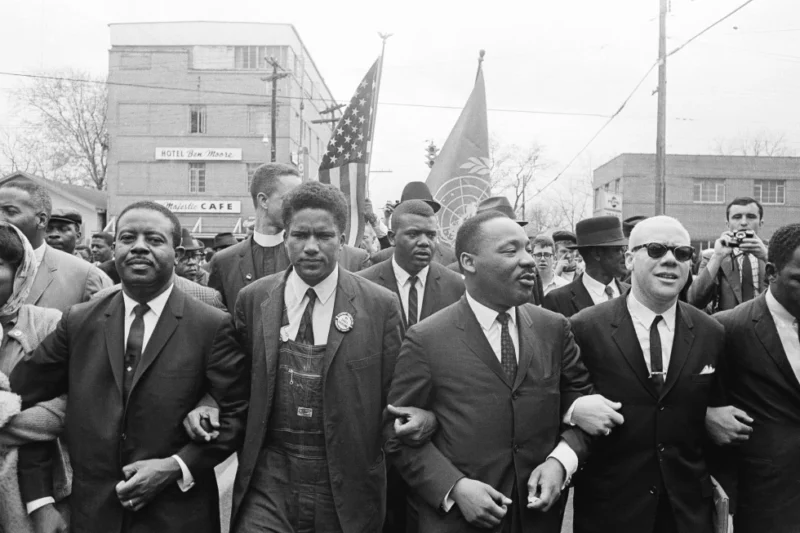
Black History Month is considered one of the nation’s oldest organized history celebrations, and has been recognized by U.S. presidents for decades through proclamations and celebrations. Here is some information about the history of Black History Month.
How did Black History Month start?
It was Carter G. Woodson, a founder of the Association for the Study of African American History, who first came up with the idea of the celebration that became Black History Month. Woodson, the son of recently freed Virginia slaves, who went on to earn a Ph.D in history from Harvard, originally came up with the idea of Negro History Week to encourage Black Americans to become more interested in their own history and heritage. Woodson worried that Black children were not being taught about their ancestors’ achievements in American schools in the early 1900s.
“If a race has no history, if it has no worthwhile tradition, it becomes a negligible factor in the thought of the world, and it stands in danger of being exterminated,” Woodson said.
Why is Black History Month in February?
Woodson chose February for Negro History Week because it had the birthdays of President Abraham Lincoln and Frederick Douglass. Lincoln was born on Feb. 12, and Douglass, a former slave who did not know his exact birthday, celebrated his on Feb. 14.
Explore our virtual exhibit galleries to learn more about Black history.
Find more Breaking News here.
Comments Are Welcome
Note: We moderate submissions in order to create a space for meaningful dialogue, a space where museum visitors – adults and youth –– can exchange informed, thoughtful, and relevant comments that add value to our exhibits.
Racial slurs, personal attacks, obscenity, profanity, and SHOUTING do not meet the above standard. Such comments are posted in the exhibit Hateful Speech. Commercial promotions, impersonations, and incoherent comments likewise fail to meet our goals, so will not be posted. Submissions longer than 120 words will be shortened.
See our full Comments Policy here.