What Ida B. Wells Would Say About Trump and the Epstein Files
Share
Explore Our Galleries









Breaking News!
Today's news and culture by Black and other reporters in the Black and mainstream media.
Ways to Support ABHM?
By Mustafa Ali, Word in Black
Poet and activist Mustafa Ali imagines what the godmother of investigative journalism would say about our need for accountability and truth.
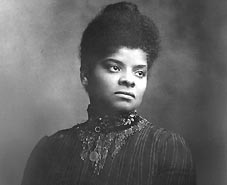
Let’s not pretend America isn’t fluent in silence. We’ve perfected the art. Generations of whispers have been buried beneath courthouse stairs, inside Black churches burned for daring to breathe, in the hush that follows every time the powerful are caught with blood on their hands and the courts say, “There’s nothing to see here.”
But Ida B. Wells never honored silence. She dragged truth through the front door and nailed it to the front page. She named names. She published evidence. And if she were alive today — watching the shadowy evasions surrounding Donald Trump and the Epstein files — she would not be polite. She’d grab the rotting roots of this hypocrisy and hold them to the light.
She’d start, no doubt, with a question that still slices deep: Whose lives matter enough to seek justice?
Jeffrey Epstein’s crimes were not rumor. They were not internet conspiracy. They were documented patterns — flights, photos, testimonies, names. Girls, many of them underage, many of them vulnerable, trafficked through a network that dressed itself in wealth and power. And now, as the files gather dust, and accountability is dissolved in distraction, the question lingers like stench: Why haven’t we seen the full truth?
Let’s be clear — when Ida documented the lynchings of Black men across the South, she knew what kind of America she was confronting. She wrote, with fire in her typewriter, that these were not acts of spontaneous violence, but orchestrated spectacles — rituals of control. The mob didn’t just want blood. They wanted silence from everyone who dared to demand due process or ask questions. And that’s what’s happening again.
Discover why Ali believes “Wells would scream.”
Read about Ida a B Wells, an unsung hero of the Civil Rights Movement.
More breaking Black news.
Comments Are Welcome
Note: We moderate submissions in order to create a space for meaningful dialogue, a space where museum visitors – adults and youth –– can exchange informed, thoughtful, and relevant comments that add value to our exhibits.
Racial slurs, personal attacks, obscenity, profanity, and SHOUTING do not meet the above standard. Such comments are posted in the exhibit Hateful Speech. Commercial promotions, impersonations, and incoherent comments likewise fail to meet our goals, so will not be posted. Submissions longer than 120 words will be shortened.
See our full Comments Policy here.