What Happened When Brooklyn Tried to Integrate Its Middle Schools
Share
Explore Our Galleries









Breaking News!
Today's news and culture by Black and other reporters in the Black and mainstream media.
Ways to Support ABHM?
By Troy Closson, The New York Times
A new report found that many schools enrolled more racially and socioeconomically diverse groups of students without sparking a major exodus of families from public schools.
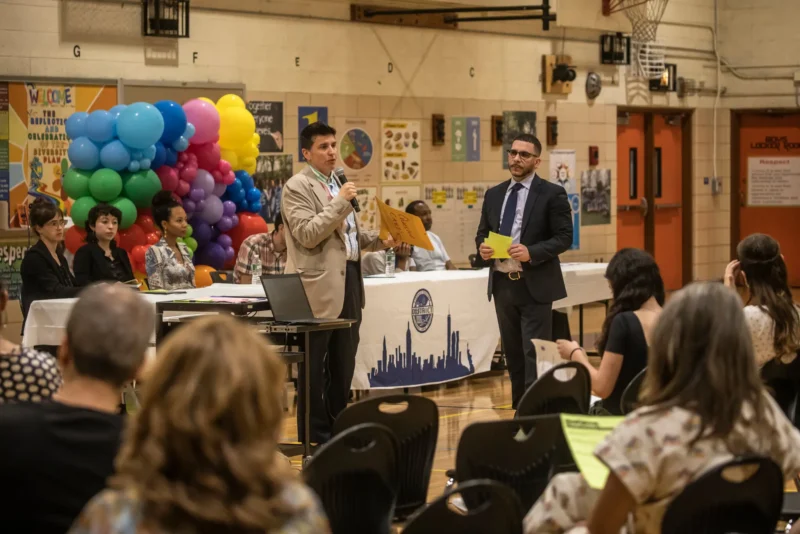
Seeking to solve a problem that has vexed public schools around the country for decades, one progressive section of New York undertook an ambitious plan to better integrate middle schools that were among the most homogenous in the city.
Selective admissions were scrapped. Every child got a lottery number instead. Schools adopted targets to admit certain numbers of disadvantaged children. And unlike in many places where integration attempts faced fierce opposition, parents led the effort.
Now, five years later, the plan appears to be working.
Middle schools in a section of northwest Brooklyn that stretches from Sunset Park to Cobble Hill went from being the second most socioeconomically segregated to 19th out of the city’s 32 local districts. Teachers and students say friendships are emerging across income lines.
And while opposition to integration efforts is often focused on concern that middle-class and white families will abandon public schools, the area — District 15 — has not seen a major exodus. The city’s public school enrollment has dropped as families leave New York or move to charters, but the district’s declines have been less extreme than elsewhere.
Across American public schools, more than a third of all students attend a school where most of their peers share the same race or ethnicity. But the Supreme Court has also limited how schools can use race to sort students among schools, and efforts to address racial segregation have mostly stalled.
Instead of using race, the district employed other categories to diversify student bodies and bring students with different life experiences and resources together. Specifically, schools prioritized students who are homeless, learning English or from low-income families — factors that are often correlated to race but that do not pose the same legal challenges.
The question of how to integrate schools has prompted heated debates across New York. In northwest Brooklyn and across the city, some Asian American families in particular have fought efforts to overhaul admissions that they say could lead to their children losing access to prime educational opportunities that they have worked hard for.
The plan in Brooklyn’s District 15 is a rare of example of progress on desegregation that has prompted less public conflict.
District 15 is home to a diverse group of students: middle-class white families clustered in Park Slope, Hispanic and Asian immigrants in Sunset Park and Black children in Red Hook.
Find more Breaking News here.
Explore our virtual exhibit galleries here.
Comments Are Welcome
Note: We moderate submissions in order to create a space for meaningful dialogue, a space where museum visitors – adults and youth –– can exchange informed, thoughtful, and relevant comments that add value to our exhibits.
Racial slurs, personal attacks, obscenity, profanity, and SHOUTING do not meet the above standard. Such comments are posted in the exhibit Hateful Speech. Commercial promotions, impersonations, and incoherent comments likewise fail to meet our goals, so will not be posted. Submissions longer than 120 words will be shortened.
See our full Comments Policy here.