What Are Black Journalists Allowed To Say About Race?
Share
Explore Our Galleries









Breaking News!
Today's news and culture by Black and other reporters in the Black and mainstream media.
Ways to Support ABHM?
Julia Craven, HuffPost Black Voices
Jemele Hill said what she said.
In a series of tweets stemming from an odd conversation about Kid Rock, the co-host of ESPN’s “SC6” called President Donald Trump a “white supremacist who has largely surrounded himself w/ other white supremacists.”
“Trump is the most ignorant, offensive president of my lifetime,” she wrote. “His rise is the direct result of white supremacy. Period.” She added that Trump’s presidency had empowered other white supremacists and that his bid for the White House wouldn’t have been successful if he weren’t white.
Backlash to the tweets, helped along by people like former ESPN reporter Britt McHenry and Fox Sports Radio’s Clay Travis ― who frequently says racist things ― led ESPN to release a statement saying Hill’s views “do not represent the position” of the network. This made things worse.
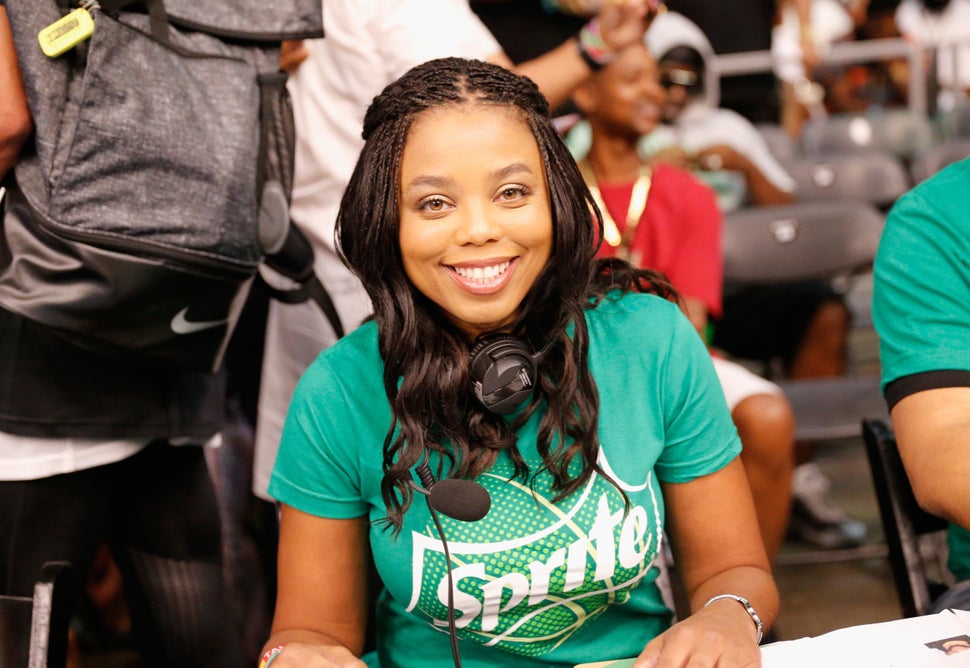
Richard Polk/BET via Getty Images
Sarah Sanders, the White House press secretary, called Hill’s tweets a “fireable offense.” That same day, ESPN tried to prevent Hill from co-hosting “SC6” with Michael Smith. In a tweet, Hill said her “regret” was that her comments “painted ESPN in an unfair light.” ESPN’s public editor, Jim Brady, said Hill ― and the media at large ― should “let the reporting do its work, and resist more incendiary labels.”
None of what Hill said in her initial volley of tweets was inaccurate. Trump voters were driven by racism, and white supremacists openly support him. His campaign rhetoric was a dog whistle for white supremacists. His attorney general has praised the Immigration Act of 1924, a law crafted by eugenicists and championed by people hoping to preserve a “distinct American type.” After a violent white supremacist rally in Charlottesville, Virginia, Trump attributed the violence to “both sides,” even though none of the counter-protesters killed anyone.
That Trump is a white supremacist is a straightforward conclusion that can be drawn from an abundance of available evidence.
But not all straightforward conclusions are admissible in mainstream American media, particularly on the subject of race, particularly when stated by a black woman.
To get a sense of the straitjackets placed on black media figures working in a predominantly white industry, where “white supremacy” is usually seen as a slur applicable only to Klansmen and Nazis, I convened three prominent black journalists: Greg Howard, a reporter at The New York Times; Elena Bergeron, former staff writer at ESPN The Magazine and current editor-in-chief of SB Nation; and a current ESPN employee who, for obvious reasons, wanted to remain anonymous.
Read the full interview here.
Read about the crucial role of black press here.
Read more Breaking News here.
Comments Are Welcome
Note: We moderate submissions in order to create a space for meaningful dialogue, a space where museum visitors – adults and youth –– can exchange informed, thoughtful, and relevant comments that add value to our exhibits.
Racial slurs, personal attacks, obscenity, profanity, and SHOUTING do not meet the above standard. Such comments are posted in the exhibit Hateful Speech. Commercial promotions, impersonations, and incoherent comments likewise fail to meet our goals, so will not be posted. Submissions longer than 120 words will be shortened.
See our full Comments Policy here.