Voter ID Law Support Linked To Attitudes About African Americans, Study Finds
Share
Explore Our Galleries









Breaking News!
Today's news and culture by Black and other reporters in the Black and mainstream media.
Ways to Support ABHM?
By Gene Demby, Huffington Post
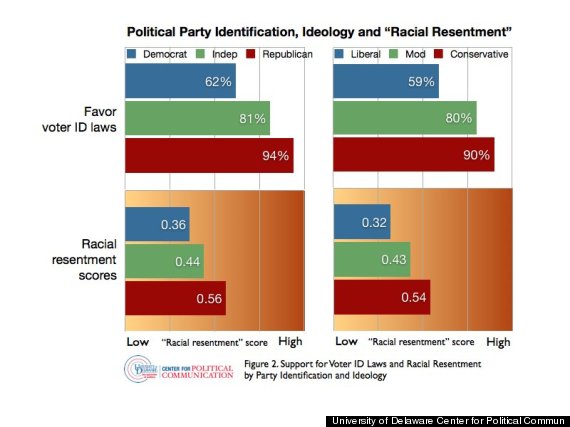
A new study has found that support for voter ID laws, especially among those who lean Democratic, is linked to one’s feelings toward African Americans.
In the study, conducted by the University of Delaware’s Center for Political Communication, respondents were asked several questions, and their answers were used to create a spectrum of “racial resentment.” The more resentment a person conveyed, the more likely they were to support voter ID laws.
Voter ID laws require people to show some form of government identification before they can cast a ballot. According to the National Conference of State Legislatures, 32 states have some form of voter ID law, with varying degrees of strictness. Since Republicans won control of 20 state governments in the 2010 midterms, at least 11 states have pushed through voter ID laws. Supporters of the laws say that they help prevent voter fraud, in spite of the fact that studies have shown electoral fraud to be exceedingly rare.
Read more of the story here.
Comments Are Welcome
Note: We moderate submissions in order to create a space for meaningful dialogue, a space where museum visitors – adults and youth –– can exchange informed, thoughtful, and relevant comments that add value to our exhibits.
Racial slurs, personal attacks, obscenity, profanity, and SHOUTING do not meet the above standard. Such comments are posted in the exhibit Hateful Speech. Commercial promotions, impersonations, and incoherent comments likewise fail to meet our goals, so will not be posted. Submissions longer than 120 words will be shortened.
See our full Comments Policy here.