Victim/Defendant: The Criminalization Of Domestic Violence Survivors
Share
Explore Our Galleries









Breaking News!
Today's news and culture by Black and other reporters in the Black and mainstream media.
Ways to Support ABHM?
By Aaron Allen, The Seattle Medium
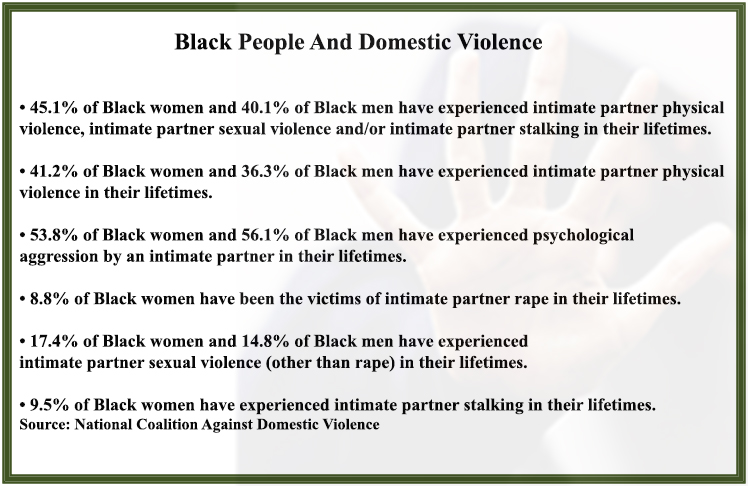
Anyone can be a victim of domestic violence, regardless of age, race, gender, sexual orientation, faith, or class, but statistics show that the justice system has criminalized Black women for being victims of domestic violence and protecting themselves from violence and abuse. Many women who should be treated as victims have found themselves on the wrong side of the criminal justice system, as incarceration rates among them have spiked.
A Department of Justice report found that more than half of Black women in jails or prisons were victims of the abuse that they were arrested for.
Additionally, a study of the California prison system concluded that Black women are disproportionately criminalized for survival strategies and defending themselves, are three times more likely to die at the hands of a current or former partner, and the majority of Black women incarcerated for killing someone close to them were abused by that same person.
According to Doris O’Neal, Director of Gender Based Violence Specialized Services for the YWCA, “between 71 and 95 percent of incarcerated women have experienced some sort of physical violence and intimate partner violence.” And despite intimate partner violence being 35 percent higher for Black women than white women, the stereotype of the angry black women, and not appearing to be a victim, makes them more likely to be arrested rather than be connected with supportive domestic violence resources than white women.
Earlier this year, Alissa Durham wrote about domestic violence in the Black community.
Comments Are Welcome
Note: We moderate submissions in order to create a space for meaningful dialogue, a space where museum visitors – adults and youth –– can exchange informed, thoughtful, and relevant comments that add value to our exhibits.
Racial slurs, personal attacks, obscenity, profanity, and SHOUTING do not meet the above standard. Such comments are posted in the exhibit Hateful Speech. Commercial promotions, impersonations, and incoherent comments likewise fail to meet our goals, so will not be posted. Submissions longer than 120 words will be shortened.
See our full Comments Policy here.