USDA to Form Commission to Tackle Racial Disparities That Hurt Black Farmers
Share
Explore Our Galleries









Breaking News!
Today's news and culture by Black and other reporters in the Black and mainstream media.
Ways to Support ABHM?
By J.L. Cook, TheRoot.com
The U.S. Department of Agriculture is launching a commission dedicated to rectifying the agency’s history of discriminating against Black farmers.
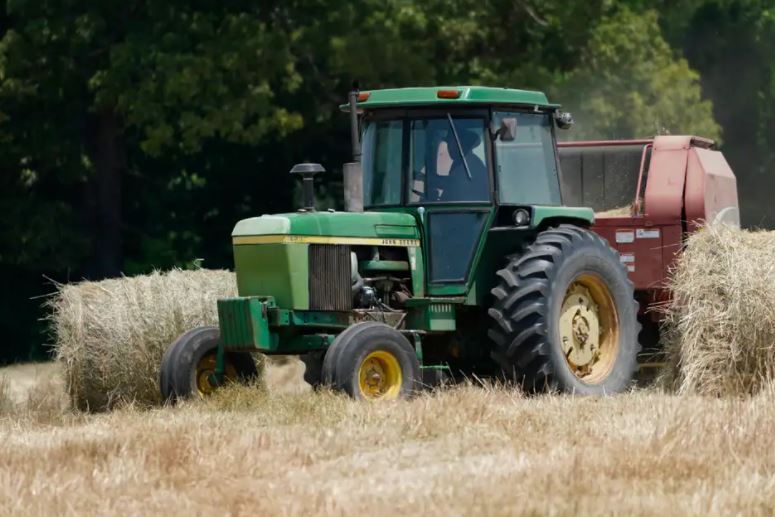
Black farmers have accused the USDA of racial discrimination for decades, claiming that the agency is actively discriminatory when it comes to providing aid and loan forgiveness. Data analysis by POLITICO backed this up, finding that the agency granted loans to only 37 percent of Black applicants in 2020 while accepting 71 percent of applications from white farmers.
Years of discrimination culminated in a lawsuit against the USDA in 1997, known as Pigford v. Glickman, which ended with the agency settling the case for $1 billion in 1999 and providing payouts for several thousand Black farmers. Another round of $1.25 billion was made in 2011 for farmers who were denied payments the first time because they missed filing deadlines.
The Biden Administration attempted to further address the agency’s troubled history with racial discrimination earlier this year by providing billions of dollars in federal aid to disadvantaged farmers through the American Rescue Plan–an effort which was held up in legal battles due to white farmers (who, again, were statistically far more likely to get USDA loans than Black farmers) claiming that it was discriminatory and unconstitutional.
Read the full article here.
Learn more about Black farming in America here and here.
More Breaking News here.
Comments Are Welcome
Note: We moderate submissions in order to create a space for meaningful dialogue, a space where museum visitors – adults and youth –– can exchange informed, thoughtful, and relevant comments that add value to our exhibits.
Racial slurs, personal attacks, obscenity, profanity, and SHOUTING do not meet the above standard. Such comments are posted in the exhibit Hateful Speech. Commercial promotions, impersonations, and incoherent comments likewise fail to meet our goals, so will not be posted. Submissions longer than 120 words will be shortened.
See our full Comments Policy here.