USDA Promised Loan Relief, Then Repealed It. Black Farmers Are Fighting Back
Share
Explore Our Galleries









Breaking News!
Today's news and culture by Black and other reporters in the Black and mainstream media.
Ways to Support ABHM?
by Aallyah Wright, CapitalB
Four growers hope a judge will overturn a ruling dismissing their claims that Congress failed to fulfill its promise regarding a $4 billion debt relief program.
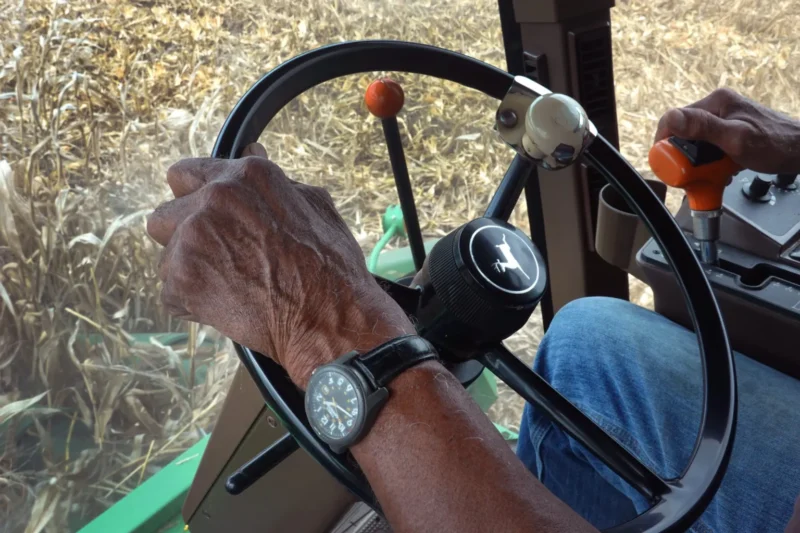
Lester Bonner purchased a tractor, hay baler, and two hay combines for his 113-acre wheat farm when he learned he’d have $50,000 of his loans wiped clean as a result of a debt relief program from the U.S. Department of Agriculture.
Many more farmers invested in their farms in anticipation of the forgiveness of loans administered by the USDA’s Farm Service Agency.
However, they never received it.
Bonner and three Virginia-based farmers of color are suing the U.S. government, which they say broke a contract in 2022 by repealing a $4 billion debt relief program, putting them at risk of losing their farms and livelihoods. The government is arguing that there was no contract.
In February, the U.S. Court of Appeals for the Federal Circuit heard oral arguments in the case.
The farmers — John Boyd Jr., president of the National Black Farmers Association; Kara Boyd, founder of the Association of American Indian Farmers; Bonner; and Princess Williams — appealed their class-action lawsuit after a previous judge dismissed their claims two years ago. They are hoping the federal appeals court reverses course, deciding that the U.S. Court of Federal Claims erred in its decision.
Discover Black history.
Follow the latest Black news.
Comments Are Welcome
Note: We moderate submissions in order to create a space for meaningful dialogue, a space where museum visitors – adults and youth –– can exchange informed, thoughtful, and relevant comments that add value to our exhibits.
Racial slurs, personal attacks, obscenity, profanity, and SHOUTING do not meet the above standard. Such comments are posted in the exhibit Hateful Speech. Commercial promotions, impersonations, and incoherent comments likewise fail to meet our goals, so will not be posted. Submissions longer than 120 words will be shortened.
See our full Comments Policy here.