Tsitsi Dangarembga on Zimbabwe: ‘Every time we say it can’t get any worse, it does’
Share
Explore Our Galleries









Breaking News!
Today's news and culture by Black and other reporters in the Black and mainstream media.
Ways to Support ABHM?
By Tracy Mcveigh, The Guardian
After her peaceful activism led to a conviction for promoting violence, Zimbabwe’s most distinguished novelist contemplates the possibility of a life in exile
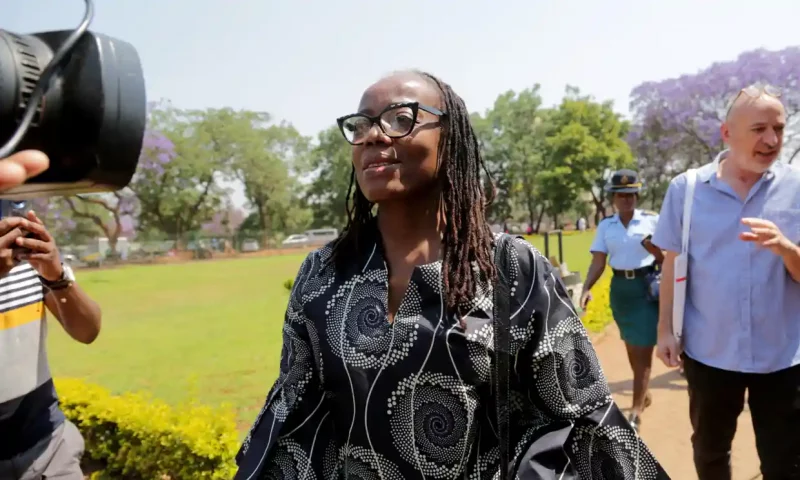
The state-led prosecution of Tsitsi Dangarembga, arguably the most globally revered author the country has produced, for joining a peaceful anti-government demonstration could signify yet another milestone in Zimbabwe’s grinding political decline.
Dangarembga, 63, has won multiple literary awards, including being shortlisted for the Booker prize. She wrote the first book by a black Zimbabwean woman to be published in English and is also an accomplished film-maker.
[…]
Dangarembga’s book This Mournable Body, shortlisted for the Booker in 2020, was the last of a trilogy. Spread out across her career, it began with Nervous Conditions, which attracted global attention when it was published in 1988. Following the childhood of Tambudzai, a bright young girl born in the then-colonial Rhodesia whose life unfolds as a metaphor for the state of her country, Nervous Conditions is considered one of the best African novels ever written, making the BBC’s 2018 list of the 100 books that have shaped the world.
Although she has just published a powerful collection of reflective essays, Black and Female, and almost finished her latest book – appropriately of dystopian fiction – writing has been hard for Dangarembga.
“Writing is not really a long process – it’s just that the circumstances, the conditions of writing in Zimbabwe, are really very difficult,” she said. “Until a few years ago I didn’t have a regular power supply, so that alone made writing difficult.
“A lack of a literary culture that stimulates me in the way I need is something that makes progress very slow because I am really thrown back on myself. It’s difficult to get the kind of literature here that inspires me.
“People read and want to read in Zimbabwe and there is an educated population here. Accessibility is a problem – there are very few bookshops and publishing houses, and the price of books is astronomical.”
Learn more about life in Zimbabwe that challenges authors and readers.
The current political climate in Zimbabwe overshadows some of the country’s great achievements.
Find more breaking news.
Comments Are Welcome
Note: We moderate submissions in order to create a space for meaningful dialogue, a space where museum visitors – adults and youth –– can exchange informed, thoughtful, and relevant comments that add value to our exhibits.
Racial slurs, personal attacks, obscenity, profanity, and SHOUTING do not meet the above standard. Such comments are posted in the exhibit Hateful Speech. Commercial promotions, impersonations, and incoherent comments likewise fail to meet our goals, so will not be posted. Submissions longer than 120 words will be shortened.
See our full Comments Policy here.